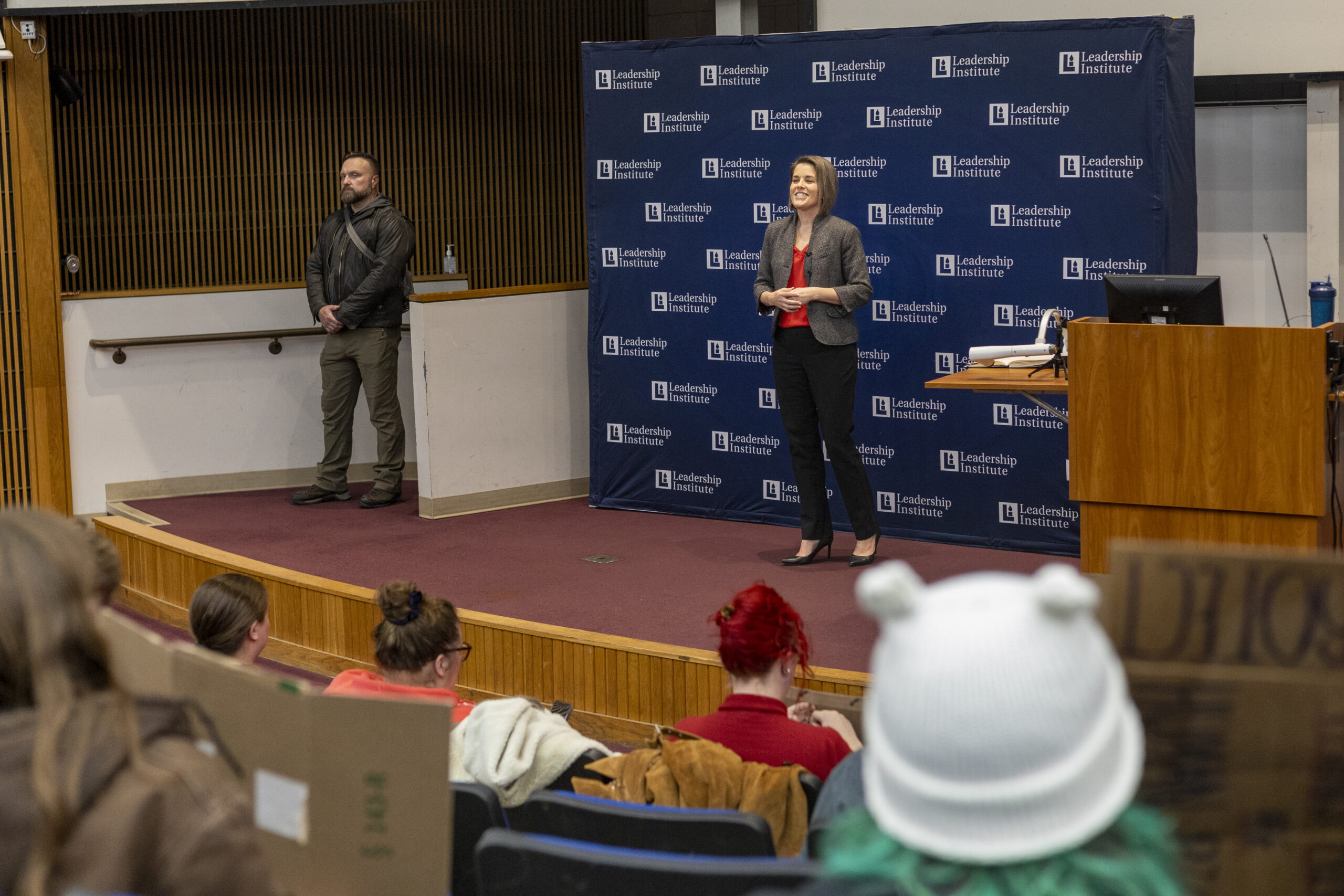
OPINION: I don’t care who you are, what you believe, or how educated you believe yourself to be, the way speech is treated on college campuses has become a game, and it is being played by the ignorant and hateful. What should be a straightforward principle has turned into a selective tool, applied when convenient and discarded when it is not. The recent situation at the University of Southern Maine makes this problem obvious. A conference focused on Palestine was effectively shut down because one of its speakers, Francesca Albanese, is under U.S. sanctions, with the justification that even allowing her to speak over Zoom, unpaid, might violate federal law. Strip away the procedural language, and the outcome is simple: a public university prevented a speaker from participating in an academic event because of the political context surrounding her views. This is an affront to the very idea of free speech.
What is worse is that this same mindset appears across the board, including among those who would normally criticize that kind of restriction. On this campus, with an upcoming speaker affiliated with Turning Point USA, there has not been a major organized effort to block the event, but the surrounding rhetoric follows the same pattern: dismissal, contempt and a tendency to reduce people to something beneath engagement. That is not harmless. It is the same instinct expressed differently. It is the belief that some people, because of what they think, deserve to be mocked, excluded, or ignored rather than argued with. And once that belief takes hold, the line between opposing ideas and hating people disappears.
This is the central issue: all hate is still hate. It does not become acceptable because it is directed at the “right” group or justified by the “right” cause. There is no meaningful distinction between hating group A for one reason and hating group B for another. What makes this worse is the common argument that hatred is acceptable if it is directed at those who themselves are perceived as hateful. That logic does not resolve anything. It reinforces the same cycle. It reveals those who engage within that mindset to be nothing more than hypocrites.
This is the central issue: all hate is still hate. It does not become acceptable because it is directed at the “right” group or justified by the “right” cause. There is no meaningful distinction between hating group A for one reason and hating group B for another. What makes this worse is the common argument that hatred is acceptable if it is directed at those who themselves are perceived as hateful. That logic does not resolve anything. It reinforces the same cycle. It reveals those who engage within that mindset to be nothing more than hypocrites.
There is a necessary distinction that continues to be ignored. There are ideas, there are people who express those ideas and there are people who act on them. Criticizing ideas is not only acceptable but necessary. Challenging them, dismantling them and exposing their flaws is the entire point of a university environment. But extending that criticism into hatred of the people themselves, or attempting to prevent them from speaking at all, is something entirely different. It abandons argument in favor of exclusion. It replaces engagement with dismissal. It ultimately weakens any position that relies on it, because it signals an inability or unwillingness to defend ideas on their own merits.
There are also practical consequences to this approach. When speech is restricted, whether through institutional decisions like the one involving Albanese or through social hostility toward groups like Turning Point USA, it does not eliminate the ideas being targeted. It gives them attention, sympathy and a sense of legitimacy they may not have otherwise had. The Office of the United Nations High Commissioner for Human Rights criticized the sanctions against Albanese in part because actions like these risk undermining broader systems of open dialogue and accountability. That concern applies just as much at the campus level. When participation is limited based on who is speaking rather than what is being said, the environment shifts from one of evaluation to one of control.
The standard has to be consistent. If the goal is to challenge bad ideas, then they must be allowed to exist long enough to be challenged. If the goal is to reduce harm, then responding with hatred only reproduces the same conditions in a different form. You cannot rid the world of what you see as wrong by adopting the same mindset that produces it. Correct me if I am wrong, but I am pretty sure it is discrimination and hatred we are fighting.