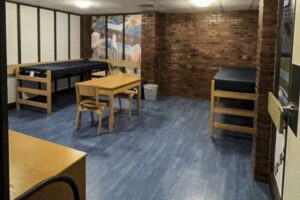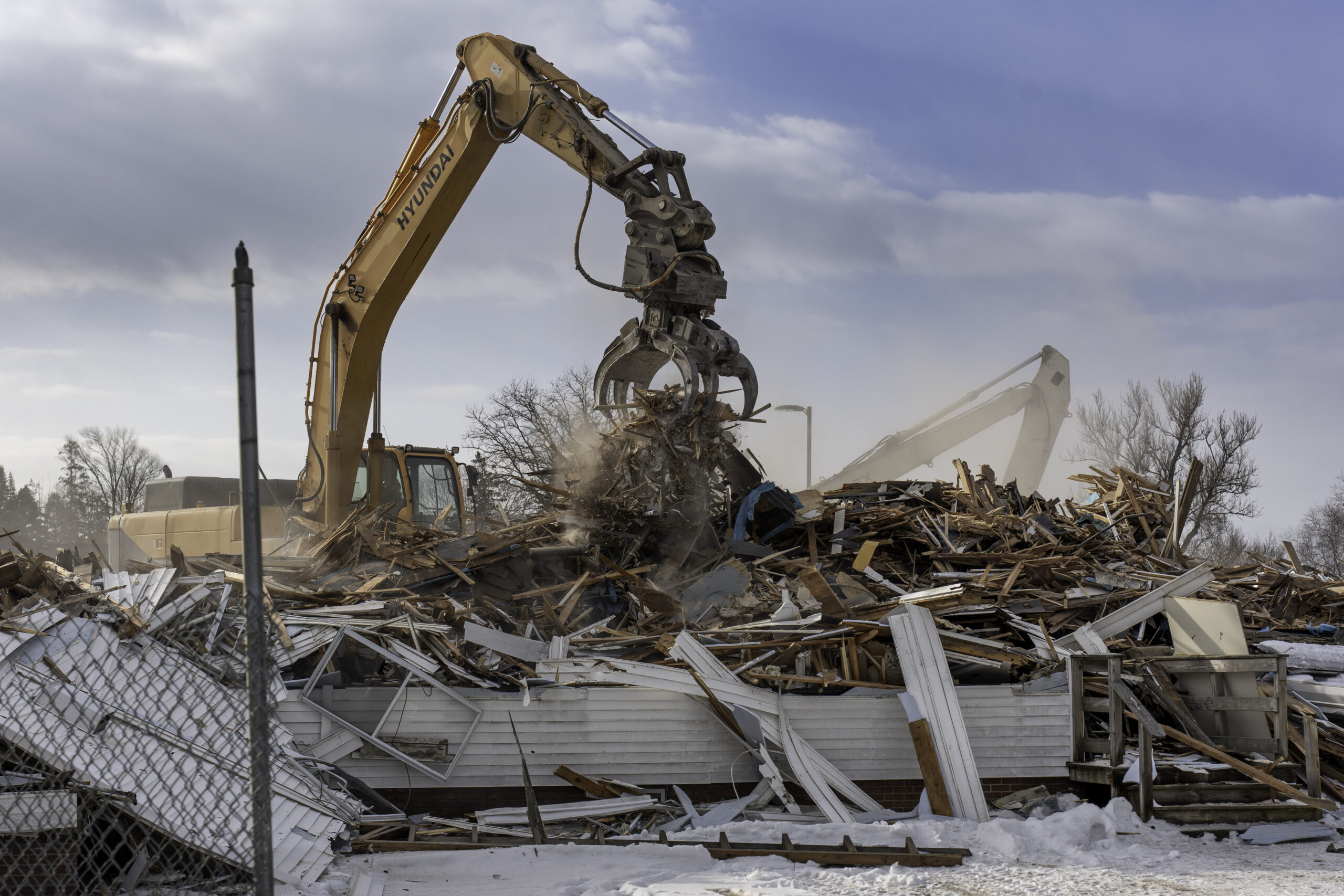
OPINION: Crossland Hall was demolished by the University of Maine on Wednesday, February 18 at 7 a.m., two hours earlier than initially decided. Crossland Hall was the oldest building on campus, cited as having been built in 1833. The decision to demolish it, while potentially understandable, was handled poorly and with disrespect to the students. The university chose to move forward in a way that left many feeling blindsided and excluded from a process that concerned not just a building, but a piece of campus history.
Crossland Hall was claimed by the university to have required at least $10 million in renovations to modernize and maintain its structure and safety. Based upon how old the building is, whether it was $2, $5 or $10 million, there is a certain point when we must admit a building is no longer useful. Old cars are turned into Sunday drivers, not daily beaters, because it would be impossible to keep them running. If Crossland Hall was going to continue to be used, the costs were only going to continue piling up and growing more expensive, no matter how often maintenance was done. Beyond that, students have been clamoring for more parking for years. Coupled with the looming construction that is set to shut down a large number of parking spots and displace a number of students, more parking was necessary. In that sense, the university had a valid and convincing case to demolish it.
However, there is a Sunday driver option for buildings, just like cars. Why not turn the building into an exhibit? They do it all the time with buildings that struggle with maintenance and simply take up space where they were originally built; all you have to do is take it apart carefully, piece by piece, and move it (see examples like the Wilson Museum’s Perkins House). The university itself is not the best place to keep the building any longer, but why not sell it or donate it to a preservation museum around Maine? Was no one interested? Was neither the university nor a potential museum willing to take on the $10 million in renovation? If it was going to become an exhibit, would it have needed all $10 million in maintenance? Was the building simply unable to be moved for certain reasons? This is the problem: we do not know.
The Crossland Hall debate shows that none of these questions had a chance to be answered. The university made information gathering and objections difficult. Little was given to the students in terms of real information. The university simply stated facts and allowed no real way to confirm them. How is one to take the objections of Lincoln Tiner, who alleges that the building did not need nearly as much money to make it usable as the university claims and that the building was older than what is officially reported? Even if one finds these claims unconvincing, as I myself would, it is also true that they were never allowed to be proven false.
When the university moved the demolition time up by two hours and did not tell anybody for alleged reasons of safety, its intentions seemed clear. While I, and most likely the university, believe that modernizing and constantly improving campus is not only extremely important but owed to the students in order to maximize the educational ability of the school. The university may not have had to change its decision, but when students asked questions about the environmental risks or the logistics of the parking lot being built and the university responded by demolishing the building without notice, it erodes the trust between the students and the institution they are meant to call home.