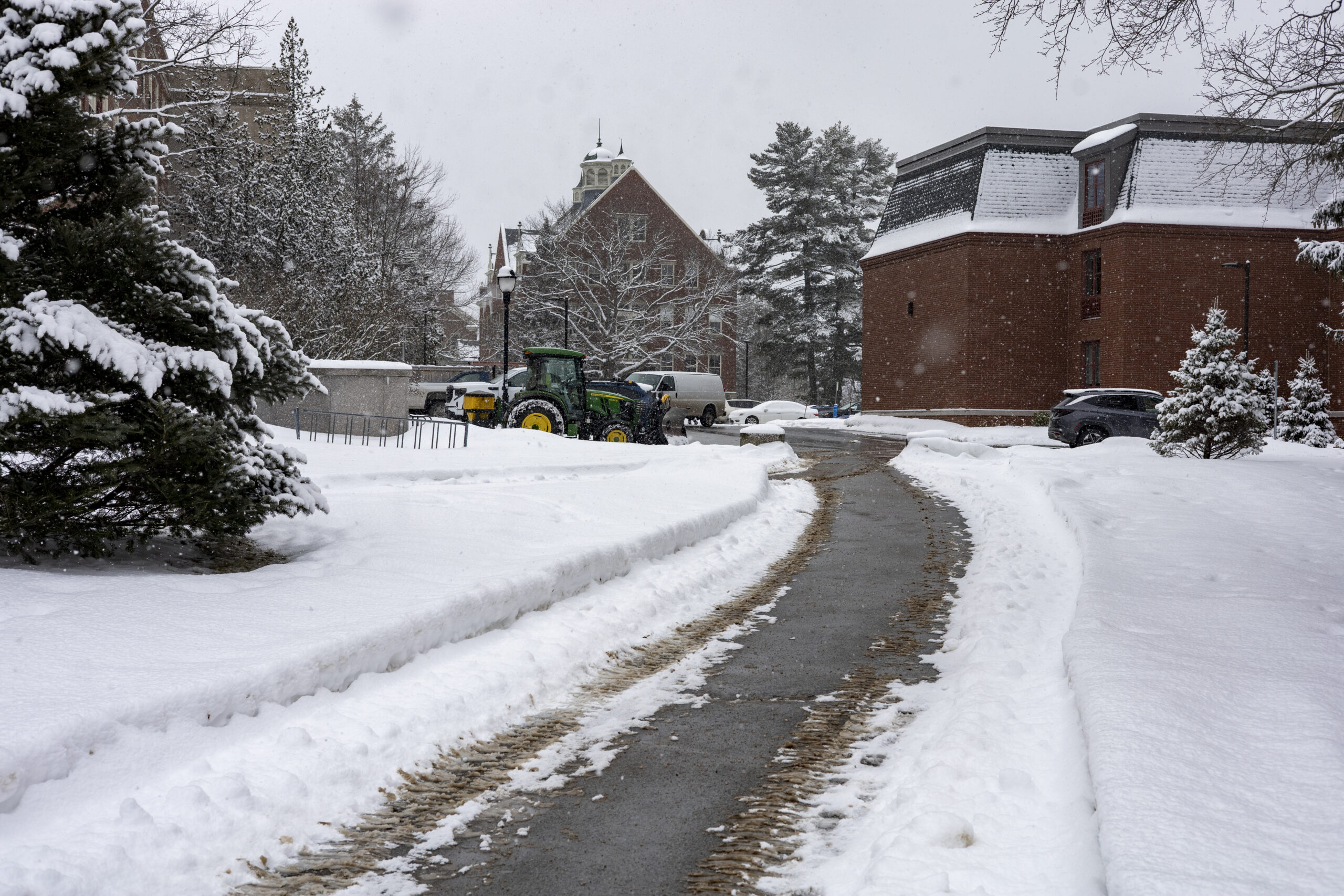
As Maine’s persistent winter continues to blanket the campus in snow, the current spring semester continues to frustrate Black Bears who are tied to parking norms during snow removal operations. The strict requirement forces students to move vehicles from residential lots by five at night on scheduled clearing days and return them by six in the morning. Many feel that tight time limits, busy schedules, looming coursework deadlines and limited access to alternative parking lots lead to unwanted towing, hefty fines and unnecessary stress during an intense academic season.
Central to these day-to-day vicissitudes of campus life is the Overnight Parking Ban, in effect annually from November 1 to May 1. This policy closes all commuter/student (black) lots, faculty/staff (blue) lots and driveways and roadways to parking from midnight to 6 a.m., regardless of weather, to ensure plows can maintain clear paths for safety and emergency access. For residential (red) lots, targeted snow removal follows a structured protocol: advance notices alert students to specific dates, requiring vehicles to relocate to designated satellite or alternate areas (such as Belgrade, Libby, or Nutting lots) on certain days. Official rules state that cars left after 5 p.m. on closure dates are subject to immediate ticketing and towing at the owner’s expense, allowing crews unrestricted access to address heavy snow accumulations typical of Orono winters.
The policy undeniably maintains campus safety by preventing snow and ice hazards that could endanger pedestrians, vehicles and plow operations. Facilities route management and Parking Services coordinate these efforts to keep driveways and lots functional amid frequent storms. Yet, students point to practical hurdles that complicate compliance. Late evening classes, part-time jobs, Fogler readers, social club activities or group study sessions often extend beyond the early-afternoon parking move window. Shuttles to isolated satellite lots may not align perfectly, and during active winter storms driving becomes riskier, especially for those unfamiliar with winter conditions or without reliable transportation. The current parking regulations seem to disrupt many Black Bears’ plans, while towing fees add financial strain for budget-conscious students already facing tuition, housing and daily costs.
Community feedback highlights a shared desire for practical adjustments without compromising snow management. Suggestions include more detailed advance scheduling (beyond weekly notices), extended relocation windows where feasible, adding additional nearby satellite options, increasing shuttle frequency during events, including clearer signage and digital alerts and maintaining flexible accommodations for documented conflicts: such as disabilities, emergencies or work obligations. Past discussions in the Maine Campus have highlighted similar parking tensions, from capacity shortages to enforcement experiences, signaling an ongoing dialogue about aligning university operations with the realities of student life in Maine’s extended and severe winters.
Parking and Transportation Services did not respond to requests for comment, but policies are clearly outlined on the University website, including the Overnight Parking Ban details, snow removal schedules (like the recent February 3 start for residential lots) and lot closure maps. Students are urged to monitor emails, the Lot Closures page and posted signs closely, and to use official channels such as the Parking Services contact form and citation appeals process to share experiences and propose refinements.
As February snow continues to fall and the season stretches till May, this issue emphasizes the collective challenges Black Bears face in navigating campus winters. Open communication between students and administration could lead to meaningful improvements, ensuring safe, accessible parking while acknowledging the demands of academic and personal life in Orono. The University of Maine community remains unified in prioritizing a supportive environment where everyone can focus on learning and growth, even amid the deepest drifts.
In the spirit of Bananas, we look out for one another through thick and thin, building a stronger, more caring cohort where everyone feels seen, heard and truly at home. Together, let’s keep pushing for changes that make the snowy season a little more comfortable for everyone with more flexible options, such as flexibility in vehicle movement, reduced fines and genuine discourse that complements both campus needs and student voices.