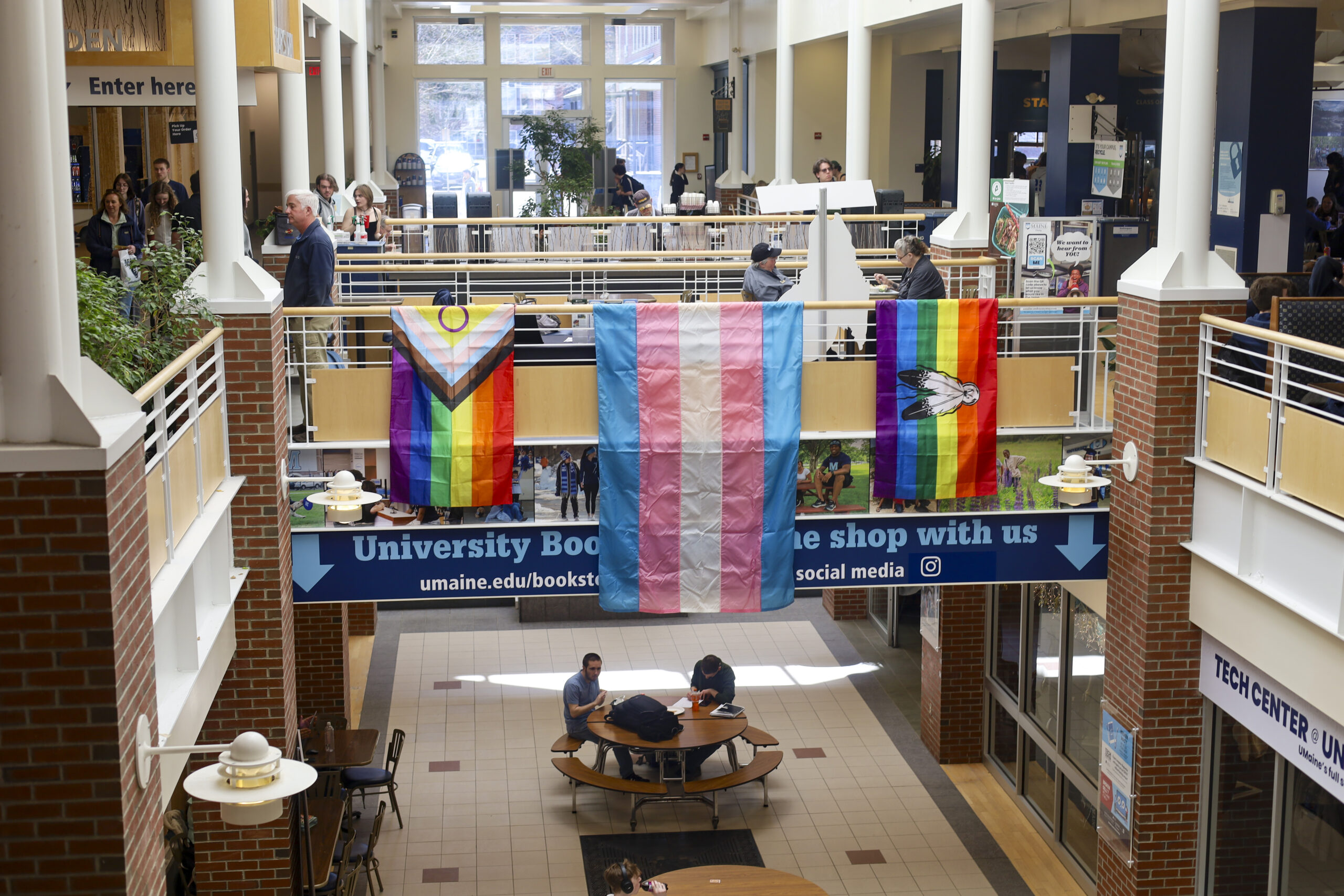
The Supreme Court ruled on March 31 that a ban on conversion therapy was in violation of the First Amendment right to free speech. According to the American Psychological Association, conversion therapy aims to change someone’s gender identity or sexual orientation, and it has been discredited as a practice for many years due to ineffectiveness. In light of the ruling, University of Maine organizations have raised concerns over LGBTQ+ student wellbeing and what other protections might be lifted for queer people.
Jaxon Gamble, the president of Wilde Stein, and Casper Cowan, the president of UMaine Triota, raised the same points about the proven ineffectiveness of conversion therapy, the prevalence of bias and concern about what Supreme Court decisions might be in store for the future. Wilde Stein focuses on queer inclusivity, whereas Triota focuses on feminism and LGBTQ+ representation.
Gamble highlighted the disconnect between the Supreme Court ruling and scientific evidence showing that conversion therapy has been deemed ineffective.
“It is already a proven and accepted standard by the American Psychiatric Association that conversion therapy is a condemned practice. It is evidently ineffective, and an individual’s personal opinions do not change that,” said Gamble, who added that the ruling sets precedent for similar anti-LGBTQ+ decisions in the future, especially ones based upon public bias.
Cowan provided a similar standpoint, stating that cases such as this one demonstrate the extent to which religious doctrine is prioritized over minority rights.
“I think this ruling sets the precedent that religious practices and doctrine, even those found to be hateful or outright harmful, take priority over Queer people’s right to exist,” said Cowan. “I think it invites parents, relatives or people in positions of power, especially of children, to put them in harmful situations, which leave people mentally scared, and aren’t even scientifically or statistically effective at altering a person’s identity.”
When asked about future issues facing the queer community, Gamble and Cowan expressed concerns about whether the right to same-sex marriage would be the next to be overturned. Gamble said he worries free speech will be used to overturn that right, just as it was used to reestablish conversion therapy.
“The current administration has become particularly skilled in using ‘free speech’ to its advantage, and it will continue to do so. Same-sex marriage is slightly more complex, but they certainly are working towards overturning it or, at the very least, allowing ‘free speech’ practices that limit it,” said Gamble.
Cowan shared Gamble’s concern, questioning how far the Supreme Court was willing to go to limit queer rights.
“I am certainly worried that this will invite more reconsiderations within the Supreme Court, and that the right to same sex marriage may be on the table,” said Cowan. “In my mind, this encroachment on our rights won’t stop until someone or something makes it stop.”
However, Cowan expressed some hope about Maine’s tendency to resist anti-LGBTQ+ legislation, saying that he didn’t think conversion therapy would be legalized locally.
“Maine is my home, it’s a place full of such strength and neighborly care, and I’d like to hope that we could stick together and stand our ground on the conversion therapy ban. I know myself and countless other trans people felt represented and supported on a national level when Janet Mills took a stand against Donald Trump’s attack on trans children in sports,” said Cowan. “Mainers are fighters, and I don’t think our state would sit by and allow these protections to fall without a fight.”
Janet Mills stood against President Trump in February 2025 in an effort to protect trans athletes in the state of Maine, demonstrating Cowan’s claim that Mainers are fighters.
Both Gamble and Cowan worried about the effects on out-of-state students, who may not be able to live safely within their communities following the legalization of conversion therapy. Cowan added that he knew a few students who were already concerned about returning home, but that they would always be welcomed at UMaine.
“I just want it to be made clear that hate of any kind has no place on this campus, and no matter who you are, where you come from, or who you choose to live your life with, you are welcome at UMaine, and there is a place for you,” said Cowan.