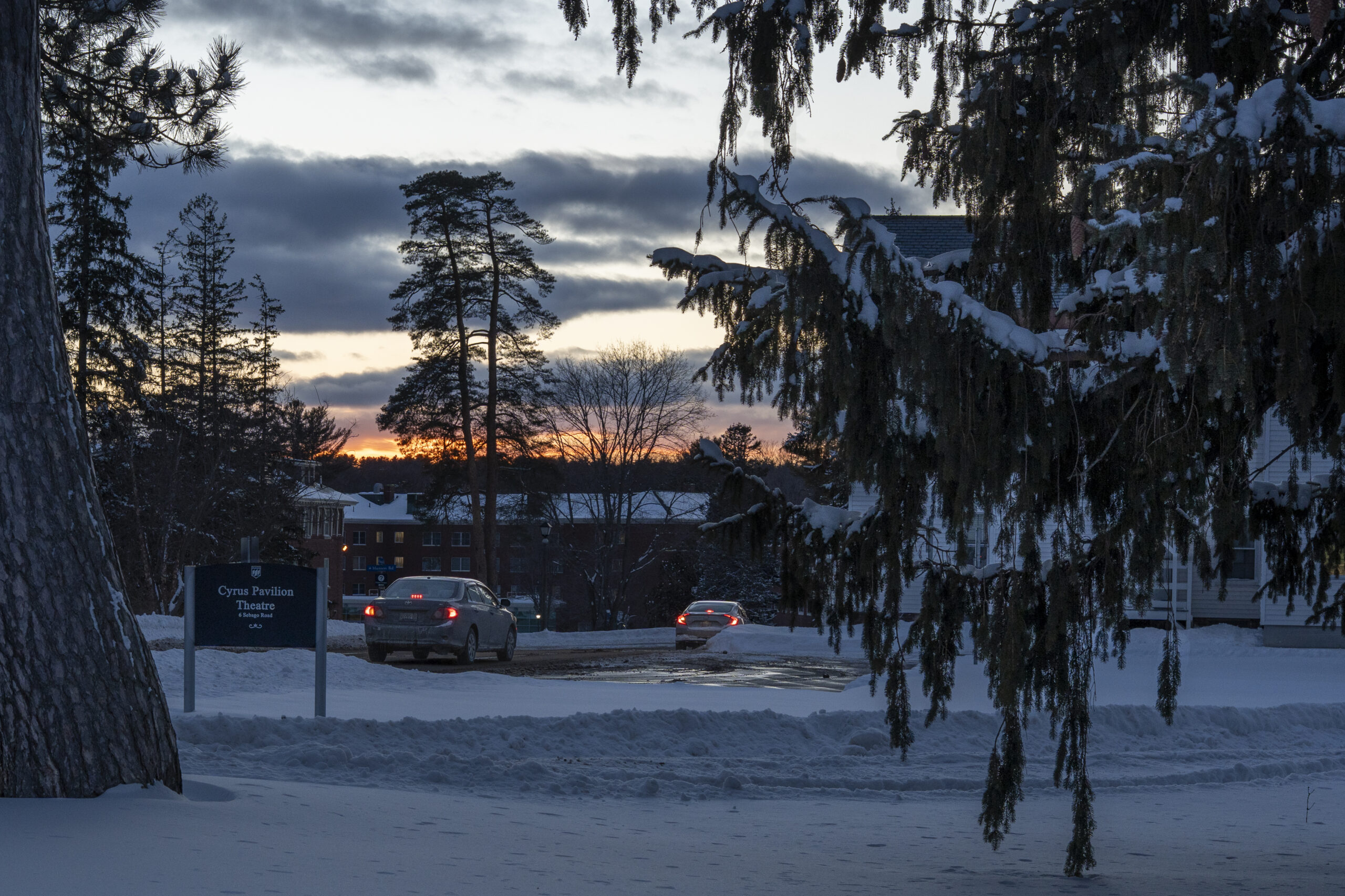
OPINION: Even now as winter winds its way down, we are still met with the occasional late-season snow or ice storm. When that happens, it can be pleasant to look out at frost-tipped grass or snow-covered trees already beginning to melt almost as soon as the snow falls. But the road often tells a different story: the inevitable student car slipped off to the side. As certain as the planet spinning, someone will be caught in one of Maine’s famous final snow bursts and fail to stay on the road.
It is easy to blame plow trucks for not acting quickly enough or to argue that the university should exercise greater caution in issuing delays. Those concerns are not entirely unfounded. However, at a certain point, it becomes clear that the responsibility falls on students themselves to become more thoughtful, deliberate drivers.
Despite it being late March, students both from Maine and those foreign to it must understand that winter conditions do not follow a strict calendar. Even into mid-April, roads can become dangerous overnight. Black ice, slush and sudden snowfall can appear with little warning. According to the National Weather Service, black ice is especially hazardous because it is often invisible and forms rapidly as temperatures fluctuate. While these late-season conditions may appear less severe than those in January or February, the quick freeze-and-thaw cycle can make them even more unpredictable.
Yet too often, it seems that drivers in Maine, especially students, continue to treat these roads as if they were dry. Speeding, following too closely and failing to adjust to conditions remain common. The National Highway Traffic Safety Administration emphasizes that reduced speeds and increased following distance are essential in winter conditions, as stopping distances increase significantly on snow and ice. Ignoring these realities does not just endanger the driver, it puts everyone else on the road at risk.
It is a fair critique of institutions to say that more could be done. Road treatment, clearer communication and timely delays all play a role in safety. However, even in ideal conditions, students have demonstrated poor driving habits. Incidents involving pedestrians and unsafe driving behaviors are not exclusive to winter weather. That pattern suggests that the issue is not just environmental but behavioral.
Students need to take greater care, even this late in the winter season. If a storm is forecast, plan accordingly. Return to campus earlier, delay travel or avoid driving altogether until conditions improve. While the university may remain open, most professors will understand reasonable delays if communicated in advance. And if they do not, no class is worth risking personal safety or the safety of others walking along icy roads and parking lots.
Ultimately, students must understand that responsibility for their safety rests with them. Complaints about road conditions or institutional decisions may be valid, but they do not change the immediate reality behind the wheel. No matter how upsetting or intrusive it is, winter driving in Maine is unavoidable. Careless driving is not.