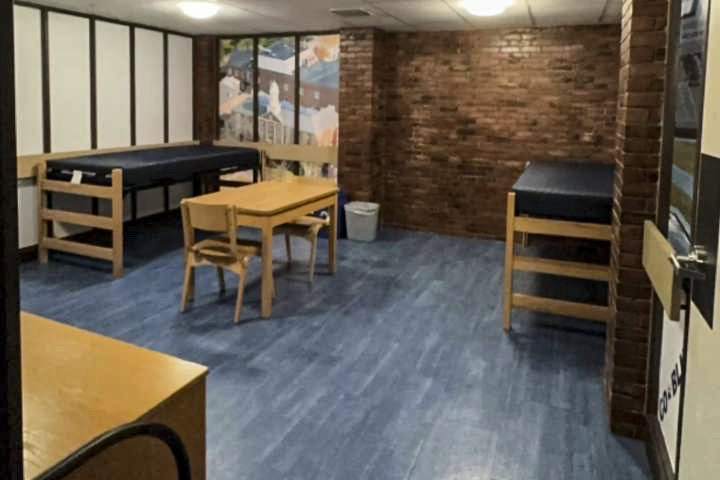
EDITORIAL: At the start of the 2024 academic year, the University of Maine found itself in a difficult situation: too many students and not enough places to house them. The problem was widely described as a temporary logistical issue that the university was working quickly to solve, but it may not end up being a one-time occurrence. The conditions that produced the shortage still exist, and they suggest the housing crunch was less a random problem and more the result of the incentives universities operate under.
UMaine’s total student population is around 11,500–12,000 students. At the same time, the university only has about 3,500 on-campus beds available for students. That leaves a large gap between the number of students attending the university and the number who can realistically live in university housing. It is not surprising that the overcrowded dorm situation in 2024 followed a sharp increase in enrollment. UMaine saw about a 13% increase in enrollment that year, which created unprecedented demand for housing. The remaining students must find housing off campus somewhere, and as more of them turn to this option, the housing market in Orono and the surrounding towns begins to change.
In my view, almost everything comes down to incentives, and this situation is no different. Supply and demand are very real forces in housing markets. The university itself creates much of the demand side. Accepting more students brings in more tuition revenue, which means more income for the institution. Because of that, the incentive is to admit as many students as possible. That does not necessarily mean accepting every applicant, but if UMaine’s acceptance rate, around 95–96%, is any indication, it means getting as close as possible. The main issue is that admitting more students is much easier than expanding housing capacity. Admissions decisions can be made quickly, while building new dorms takes years of planning and construction.
Freshman enrollment alone shows how quickly the impact can grow. UMaine enrolls roughly two thousand first-year students each fall. Even small increases in that number add hundreds of additional renters to the local housing market in a single semester. Those students must live somewhere. Once dorm space fills up, they move off campus and begin competing for apartments and houses with other students and local residents.
Because on-campus housing is limited, each additional student means another person searching for off-campus housing. That growing demand either requires new housing supply or leads to higher prices. When demand rises quickly but supply cannot keep up, rents increase. In Orono, zoning restrictions and development costs can slow the construction of new housing, which makes it harder for supply to expand quickly. As a result, students may have to take on more debt or live with more roommates simply to keep housing costs manageable. Local residents and young graduates who work in Orono feel the same pressure, since they are competing in the same housing market that is increasingly shaped by the university’s enrollment decisions.
The university has tried to respond with short-term solutions. Administrators reported converting some double-single dorm rooms into standard doubles and working with local accommodations, including the on-campus hotel, to temporarily house students when residence halls reached capacity. These measures may solve immediate problems, but they do not address the underlying forces that produced the shortage in the first place.
The larger issue is not necessarily that the university is behaving irrationally. In many ways, it is responding logically to the incentives it faces. Tuition revenue increases with enrollment, students have access to loans that allow them to pay rising tuition and many career paths still push students toward obtaining a college degree. When those forces combine, universities are naturally encouraged to admit more students, while housing capacity expands much more slowly.
That is why the housing shortage seen in 2024 may be a symptom of a broader structural problem. If the incentives continue to reward universities primarily for increasing enrollment, housing pressure will likely continue as well. Addressing the issue therefore may require rethinking the incentives surrounding higher education itself. As long as the system encourages constant enrollment growth without considering housing capacity, situations like the one UMaine faced in 2024 will remain difficult to avoid, for students, for the university and for the surrounding community.