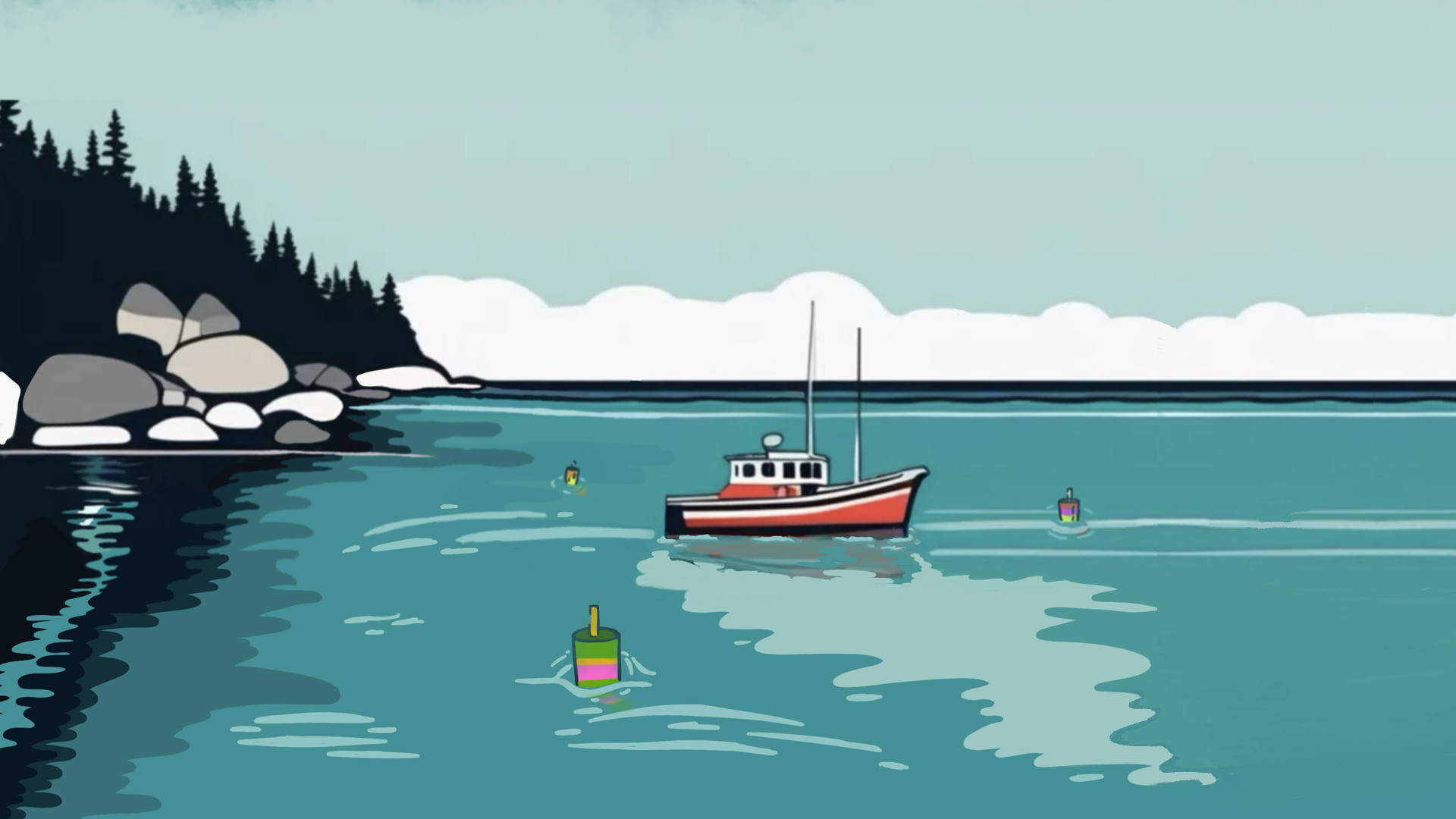
Lobster: the red, spiny, beating heart of Maine’s economy, culture and national reputation. Around the United States and around the world, Maine is renowned for this crustaceous delicacy. A meal shared on a summer’s day, as you eat freshly boiled tail meat from a family friend’s boat or enjoyed in formal attire as you begrudgingly fork over 45 dollars for a 4oz lobster roll. But beneath the place mats and shell crackers, there dwells an often overlooked story. A story of wealth inequality, climate struggles, regulatory battles and a generation forced to reconcile with a bitter future.
What is a lobster? A spiny, nutrient scant, bottomfeeding crustacean, a hunter and a scavenger. The lobster suffers an unusually cruel fate among its marine brethren. Trapped, shipped and stuffed to capacity in glass cages, a mess of bound claws and useless limbs waiting in stupefaction to be poked and prodded by children in the supermarket, only to be boiled alive whilst climbing over the corpses of fellow victims as its innards and shell boil to the savory red hue of New England lobster fame.
Nonetheless, people will travel from across the country to empty their wallets at Maine’s coastal restaurants. In Maine, the lobster has long existed in an uneasy juxtaposition. This alien critter is pivotal to the state’s economy, bringing in more than a billion dollars every year, yet since 2018 the presence of lobsters in Maine’s gulf has decreased by 34%. With this juxtaposition comes a rich and layered socioeconomic history.
All across the coast of Maine there are thousands of families who have been in the lobster business for generations. Many of these lobstermen and women wake before the sun, board the same boat their father drove 20 years before and go out on the ocean for ten to twelve hours. It’s a backbreaking lifestyle, lifting hundreds of 45lb traps, soaked in freezing ocean spray, baking in the sun. With hands turned to leather, these Mainers supply 80% of the nation’s lobsters. All so restaurateurs can rake in profits hand over fist, off of the hard work of a sternman making $34,000 annually.
The lobster is a symbol for wealth, resilience and more than ever it’s become the symbol of growing disparity. The lobster was once considered a working class meal, a coastal byproduct, fit only for the consumption of those that would work to catch such a creature. That is until some time in the late 19th century, when the lobster entered the palette of the New England aristocracy, eventually becoming a staple of Rockefeller galas and fine dining institutions. Once refrigeration and shipping technology matured, the Maine lobster was in demand all across the United States. It’s remarkable how quickly the lobster ceased to feed families and began to line pockets.
With the meteoric rise into crustaceous stardom, the demand for lobster completely changed the landscape of Maine’s coastal communities. As all rising industries are ought to do, the lobster business underwent a fury of regulatory changes. Since the 1970s, coastal communities have both embraced and battled regulatory changes in their industry. On the one hand there’s many concerns about lobster migration, as the same ocean warming that brought a huge abundance of lobster to Maine in the 1970s is very likely going to push lobster birthing sites into Canada. Along with overfishing rules, protection being added for right whales and trapping limitations, the lobster industry has seen a lot of regulatory change over this last decade.
This contention is no clearer than in the recent allegations of child labor violations against House Republican leader Billy Bob Faulkingham. After supposedly bringing his 14-year-old son and a family friend out on the water, where the boys learned how to band lobster claws for a total of four days, there are allegations being raised by the Department of Labor. The lack of proper documentation/licensing, even for informal instruction, is not permissible under Maine state law, yet families and advocates in the lobster industry are rallying around Faulkingham.
This case is somewhat unprecedented in the industry, and to many lobstermen represents a perceived attempt to break down the way of life that has existed on Maine’s coasts for generations. Lobstering is an inherited industry, where many fishermen learn as teenagers on the boats of family or friends. This is a deeply important trade off of knowledge and culture. The lobster industry is already facing a very real threat of circumstantial decline given rising ocean temperatures, and this most recent legal case represents just another obstacle in the longevity of the industry.
Many questions linger regarding the future. With Faulkingham being ordered to pay a fine for the failure to document the work of a minor, there is a feeling of unease in coastal communities. If this trend of restriction continues, this way of life may become unattainable faster than anyone was predicting. Whether the Department of Labor will further these restrictions on informal apprenticeships remains to be seen.