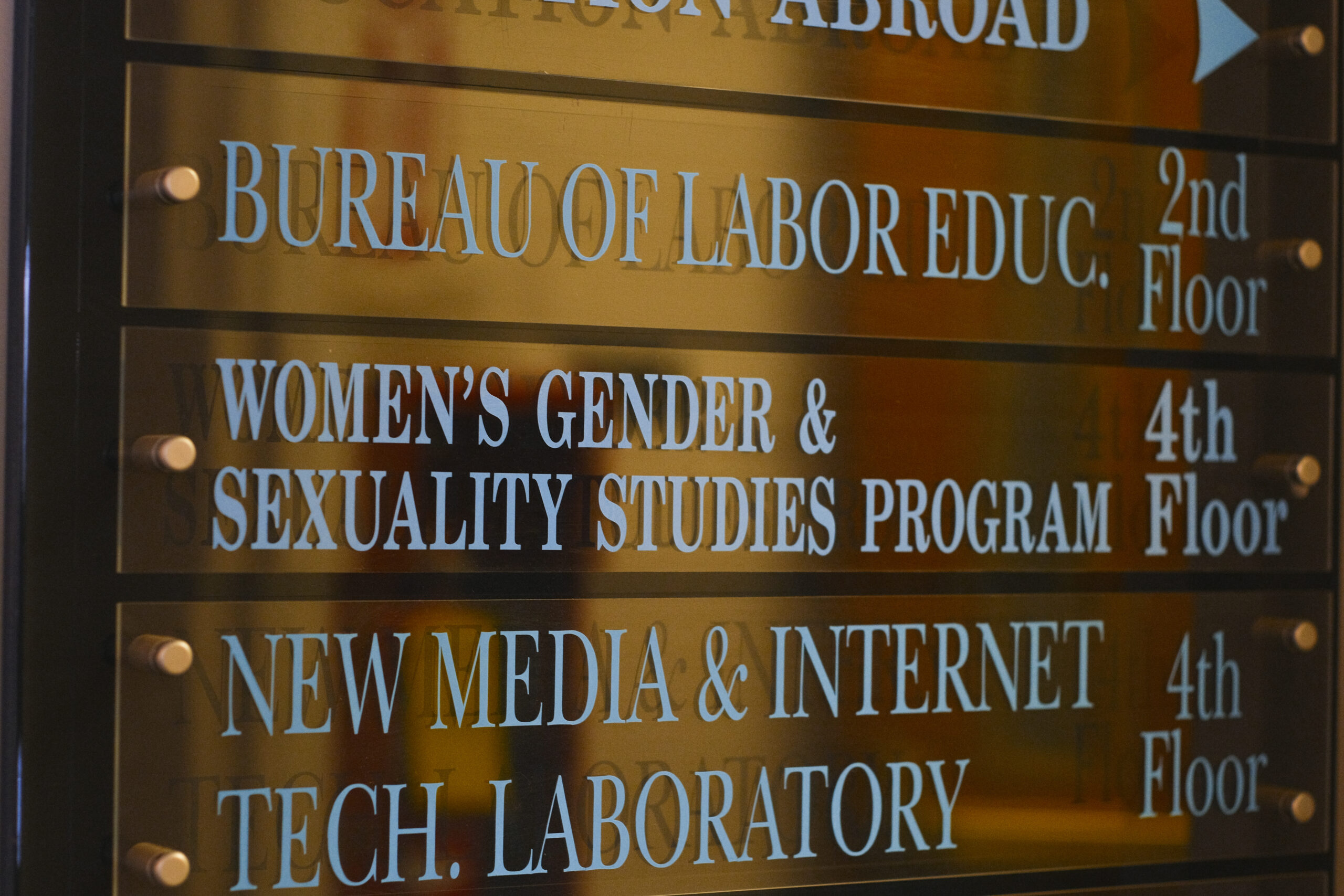
The Women, Gender, and Sexuality Studies (WGS) Program at the University of Maine stands as a longstanding pillar of interdisciplinary scholarship on campus, with roots stretching back to the early days of feminist academic integration.
The program traces its origins to the 1970s, when the first Women’s Studies course was offered by pioneering faculty members Ann Acheson, Jan Kulberg and Jane Pease. This marked UMaine’s early engagement with gender-focused education amid a growing national movement. By the late 1970s and into the 1980s, supported by a U.S. Department of Education grant, the Committee on Women and the Curriculum worked to weave gender and racial perspectives into broader disciplines, while also addressing gay and lesbian issues. Milestones included formalizing the Women in the Curriculum program, launching the Maryann Hartman Awards to honor women’s contributions, hiring Evie Newlyn to shape a structured program and introducing introductory courses. A dedicated Women’s Studies concentration eventually received approval, solidifying its place in the curriculum.
Momentum continued into the 1990s and 2010s, with the inaugural Maine Women’s Studies (WST) conference uniting participants from UMaine, the University of Southern Maine, Bates, Bowdoin and Colby colleges. Over time, the program broadened its scope, evolving into Women’s, Gender and Sexuality Studies to encompass intersecting identities, sexuality, race, class and power dynamics. Today, it offers a Bachelor of Arts major with core and elective courses drawn from multiple departments, fostering critical inquiry and partnerships across campus, including with STEM fields and Nursing.
These historical foundations underscore the program’s enduring value, even as UMaine navigates pressing financial realities. Like other New England public universities such as the University of New Hampshire, UMaine faces budget pressures from federal grant reductions (including USDA and other sources), recent enrollment declines, deferred maintenance and rising costs. In December 2025, the university directed all departments, colleges and units including athletics and administration to propose approximately seven percent budget reductions to address a projected $18 million shortfall for the upcoming fiscal year (FY2027). Final decisions on impacts are expected to be finalized and presented in the coming weeks, with the University of Maine System reviewing the overall budget proposal in early March.
An interview with Dr. Elizabeth Neiman, director of the WGS program, shared a cautiously optimistic outlook. Despite the program’s historically modest funding, she said she believes it will remain largely protected. “I have confidence in the University and the Maine state government,” Dr. Neiman said, pointing to what she described as the program’s resilience and ongoing importance. Dr. Neiman also said the program is taking proactive steps to strengthen its position by deepening interdisciplinary collaborations and expanding partnerships with STEM, Nursing and other fields to increase relevance and integration across campus.
Her comments come as UMaine leaders continue to frame the budget process as a response to a projected structural gap, with a focus on both expense reductions and revenue gains through recruitment, retention and optimizing academic offerings.
Dr. Neiman said student anxieties have intensified in part because of what is happening nationally. She pointed to the recent closure of a women’s and gender studies program at Texas A&M University, which has drawn national attention and fueled fears that programs focused on gender and race are increasingly vulnerable.
News coverage has reported that Texas A&M is ending its women’s and gender studies program, with the university citing limited student interest and policy-related changes affecting how race and gender topics are addressed in classrooms. Dr. Neiman said events like this make it harder for students to feel steady during budget conversations, especially when broader political debates and perceived surveillance concerns heighten tensions rather than calm them.
As budget details begin to solidify by late February, the WGS program’s long legacy, from its 1970s origins through decades of growth and adaptation, serves as a reminder of its vital role in promoting inclusive education and critical perspectives at UMaine. Faculty, students and supporters are urged to stay informed and engaged, advocating to preserve this essential academic space amid Maine’s higher education challenges. Awareness and community voices remain key to ensuring the program’s continued strength.