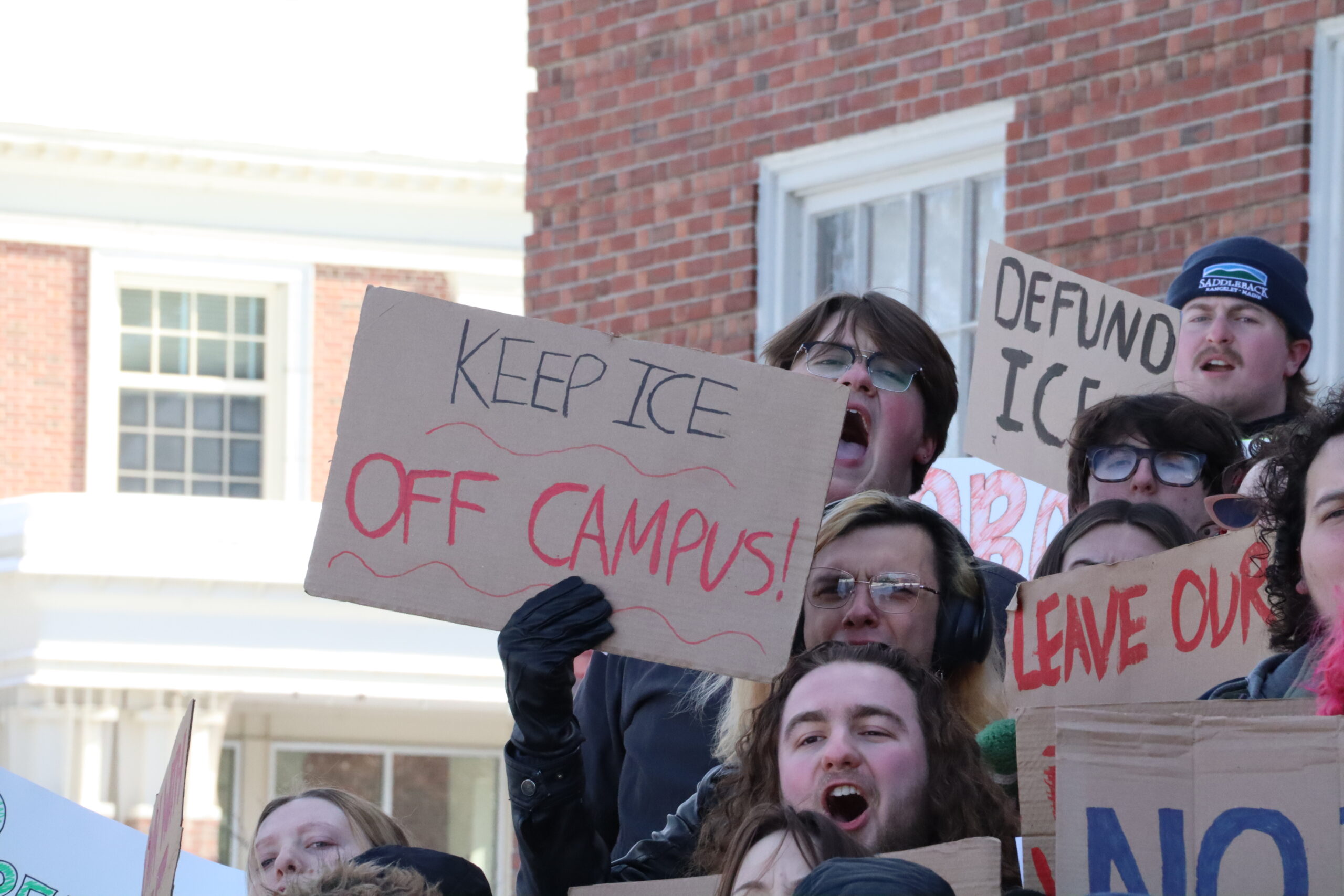
Intensified immigration enforcement has put Maine in the national spotlight with mass protests and public anxieties. Following the detainment of University of Southern Maine student Jean-Pierre Obiang, the Orono community has braced for possible impact, in case Immigration and Customs Enforcement (ICE) looks to other UMaine system students.
With ICE activity ongoing, there have been worries within the UMaine campus about what would happen if agents were to come to Orono. Students are confronting the reality that there are no local immigration legal services, with the university lacking funding and infrastructure to support students if Customs and Border Protection (CBP) were to visit campus.
The President of the University of Maine Student Government (UMSG), Keegan Tripp, offered one key resource: the student body lawyer, Sean O’Mara. However, O’Mara’s training is not in immigration, as he told Maine Campus that he has only seen 12 immigration law-related legal questions/clients in a decade of work. He attested that this may change with the national influx of ICE activity. He told us that he would refer students to the Immigrant Legal Advocacy Project (ILAP) for visa and asylum concerns. When that is not appropriate, O’Mara can help with legal issues that may impact immigration areas and provide referrals to private attorneys.
In comparison, the University of California system spends $3 million per year to offer the free Immigrant Legal Services Center that aids DACA renewals and U-Visas across the nine California campuses. Other universities partner with organizations such as TheDream.US to assist immigrant college students.
Some students have asked if establishing a bond or immigration legal fund through the student activity fee could be implemented. UMSG’s purview, however, is focused on maintaining student clubs with its 120,000 dollar budget allotted for. Tripp explained that no one has specifically asked for a fund to be made, and even if students did, it would be unattainable.
“I think when it comes to the resources that the university is providing — I understand that they’re very limited — and I think that they have kind of informed the campus about the resources that they’re going to provide and are willing to provide,” said Tripp.
This was in relation to the email from the UMaine Police Department (UMPD) Chief William Flagg, where he gave information about how the university plans to handle possible federal enforcement. He explains that ICE can enter generally accessible public campus spaces, and that students, if approached, should call UMPD, as they are versed in student rights in relation to outside law enforcement. This is in compliance with the federal government.
Senior Manager of Research and Policy, Dr. Corinne Kentor, with The Presidents’ Alliance on Higher Education and Immigration in Washington, D.C., emailed with the Maine Campus about what universities should be implementing.
“Institutions should develop protocols for assessing and verifying reports of ICE presence on campus and develop a communications plan to dispel misinformation and ensure campus community members remain informed about the scope of ICE activity,” wrote Kentor.
The university has not developed protocols beyond directing students to UMPD. Tripp attributes this to funding, sharing that the spring semester will have a budget shortfall. This is in reference to terminated federal awards, decreased enrollment and deferred campus maintenance according to University Spokesperson Samantha Warren, reported by Maine Public in December 2025. This 7% cut, accumulating in $18 million, does not allow the university to put resources towards worries or anticipation of ICE presence.
“All of this stuff [ICE threats on campus] is very new, and the fact of the matter is, is that when it comes to my perspective on that, is that the University of Maine doesn’t have millions of dollars to put anywhere,” said Tripp.
Advocating for U.S. campuses to increase focus on ICE issues, Dr. Kentor shared with Maine Campus her advice for UMaine that does not include adding funding for protections.
“UMaine can and should devote attention to addressing the impact intensifying immigration enforcement activities have on students’ mental health.”
In the wake of multiple deaths on campus, mental health has been a key topic at the university. The resources are within the counselling center, with nothing specifically for ICE support. Tripp mentioned the importance of the village mentality.
“I think a lot of the kind of on-the-ground support is unfortunately going to be, you know, community motivated, because I think the administration has made it very clear about as far as they’re willing to go on these things,” said Tripp.
Organizations such as Students for a Democratic Society (SDS) and Jewish Voice for Peace (JVP) have asserted their support for anti-ICE efforts. The Maine Campus looked for other local organizations with resources for students with immigration concerns, but few came up.
Executive Director of the Maine Multicultural Center Pamela Proulx-Curry told Maine Campus that they do not have a lot of expertise around international students’ legal status or needs. The Office of International Programs (OIP) lists that they can assist students with understanding F-1 and J-1 visa requirements, but does not list support services if ICE were to come on campus.
Warren referred Maine Campus to Chief Flagg’s and President Ferrini-Mundy’s message to the students, citing the university is “deeply sensitive to the heightened anxiety” and listed the ILAP as a resource for otherwise community-derived support.