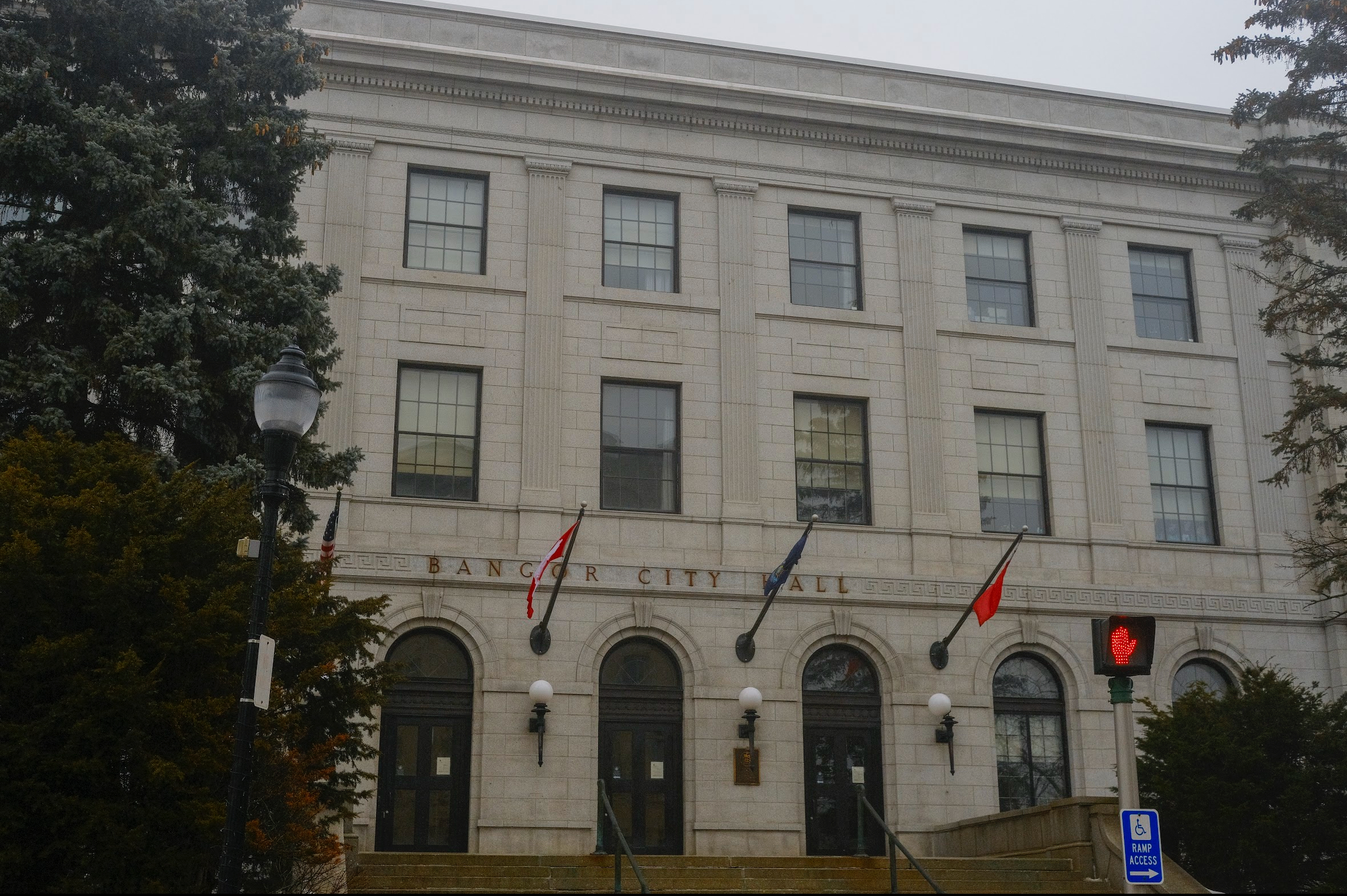
Bangor city councilor Michael Beck is backing a new “Employee Authority in Immigration Matters” ordinance to be debated on the Bangor City Council floor this Monday, March 9. This law would make sure that a neutral magistrate has reviewed all the facts of the case and signed a warrant before the police and state of Maine employees cooperate with, and share information about a person that Immigration and Customs Enforcement (ICE) or Customs and Border Patrol (CBP) are asking about.
“The ordinance ensures that employees, whether they be police officers or folks working in City Hall — if they’re asked for information regarding immigration status, whether it’s ICE or Customs and Border Patrol, whoever’s asking for the information — they have to present a judicial warrant before we’ll cooperate,” said Beck.
He continued to speak on drawing a clear line between the local and federal responsibilities of state employees.
“If someone’s detained for no other reason other than immigration status, this would ensure that we don’t cooperate with ICE, because immigration law is a federal matter. Local police shouldn’t be getting involved in that. That’s not what we budget for. That’s not what we’re hiring police to do,” said Beck.
When asked for a concrete example of preventative measures the bill would offer, Beck referenced recent immigration enforcement activity at Kobe Ninja House Japanese Grill in Bangor.
“This [bill] would also prevent cooperation with ICE when it comes to immigration matters and making arrests or, as we saw at the Kobe restaurant, a raid. Bangor police would not participate in enforcement of immigration law,” said Beck.
The city councilor suggested his push to limit Bangor’s cooperation with federal immigration authorities would be about acting preemptively, given events that happened in Minneapolis.
“What motivated me to draft this ordinance were the events that happened in Minneapolis,” said Beck.
After watching what unfolded elsewhere and seeing an “ICE surge” in Maine, Beck concluded that “it’s just a matter of time before we are asked to cooperate. I felt that now is the time to get something in our code.”
Beyond the legal details, Beck argued that the ordinance is about trust between residents and local police. He said it is important that the Bangor City Council “actually passed a law and put it in writing that we will not cooperate.”
Beck said his ordinance is scheduled for a second reading and vote at the council’s next meeting on Monday March 9, alongside a separate order that would direct the city manager to immediately begin enforcing the new state law, LD 1971. This law aims to restrict police cooperation with ICE, but is not set to take effect until July 2026.
“On Monday at the Bangor City Council, there’s actually going to be two things we’ll be voting on,” said Beck. “The first one will be my ordinance, and I have a feeling that it’s not going to pass. But instead, they’re going to do an order that instructs city staff to start applying the new state law [LD 1971].”
Beck said that, from residents’ perspective, the outcome would be essentially the same whether his ordinance passes or the council simply moves to enforce LD 1971 earlier. He said that instead of waiting until July to get ready for the new law, the city plans to start training staff now and begin enforcing the state law right away, which he says Bangor is allowed to do under the Maine Constitution.
“The end result would be rather than waiting until July to prepare for it. You know, we’re going to train our staff today and start enforcing that state law today, which we have the right to do under, you know, Maine home rule under the Constitution,” said Beck.
Beck’s ordinance is reportedly shaped by local advocates, legal experts and various enforcement cases. He credits Bangor’s Advisory Committee on Racial Equity, Inclusion and Human Rights, which pushed an earlier, symbolic measure and later “advised me and others on how to get this ordinance through.”
He reportedly asked the ACLU to review the language because “the biggest thing was the legal aspect” — including concerns that cities are having their resources “commandeered” and their “constitutional rights trampled by being forced to cooperate.”
Despite positive aspects of the bill discussed, Beck ended the interview by acknowledging that the ordinance has limits because Bangor cannot control federal agents’ actions.
“The hardest part is that even if we put this law in place, a city like Bangor can’t tell the federal government what to do,” said Beck. “ICE can still come in and do what it wants, but this will make sure it’s not your local police knocking on your door over an immigration issue.”
Those interested in watching a recording of the city council meeting where Beck’s ordinance is discussed can watch the livestream on their YouTube channel.