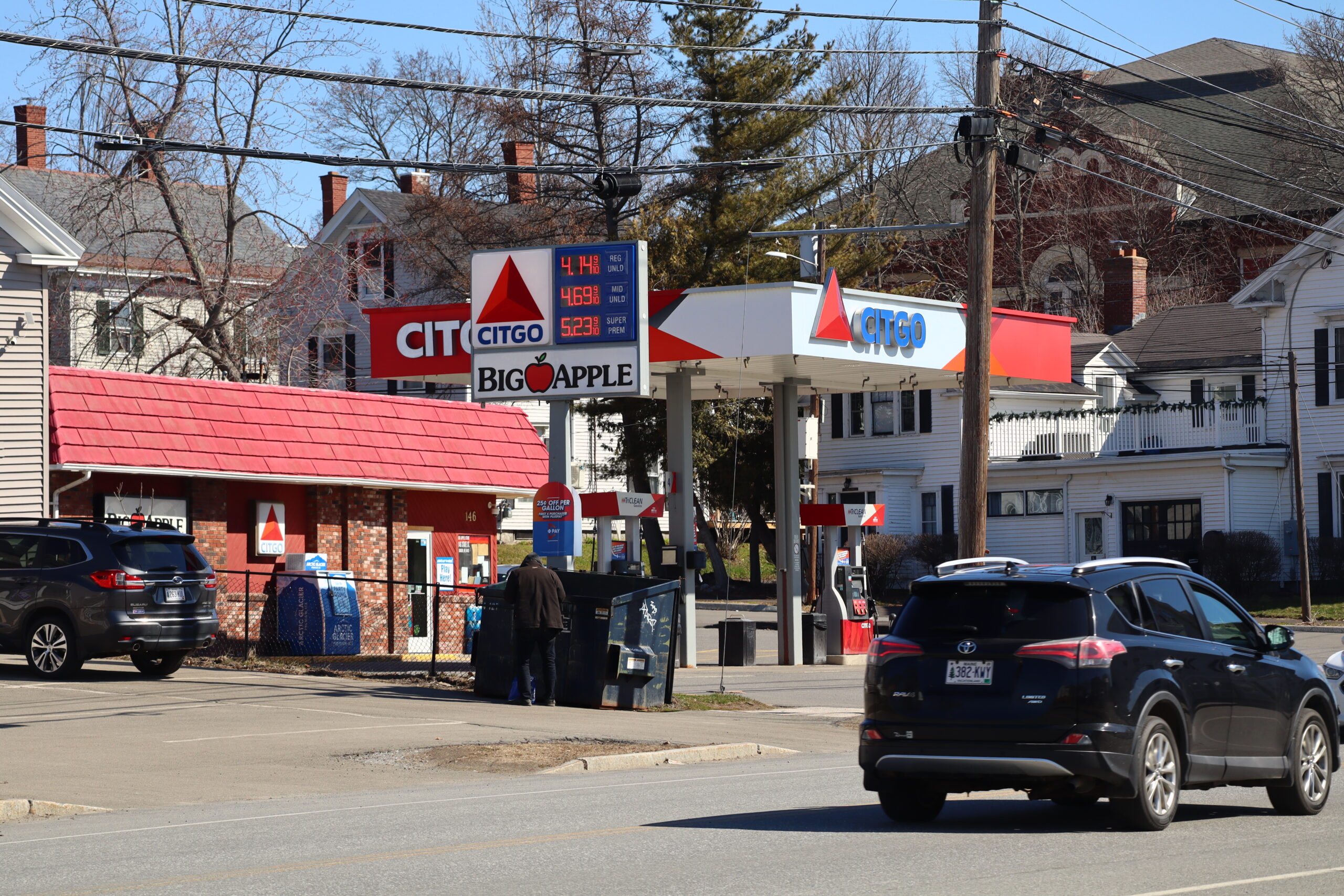
On Feb. 28 the United States of America attacked Iran, initiating “Operation Epic Fury.” Since then, the Iranian government has closed the strait of Hormuz for cargo vessels, most notably to oil tankers that have been unable to pass through the region safely. Before the war began, roughly 20.3 million barrels of crude oil and petroleum would pass through the strait daily. This blockade has led to an increase in gas and heating prices around the world. Given factors increasing financial strain on the average voter and University of Maine student, several commuter and non-commuter students weighed in on the impact of increased gas prices.
According to an email from UMS Chief External and Governmental Affairs officer Samantha Warren, UMaine has 3732 commuter student parking passes currently issued to undergraduate students, with an additional 2480 passes issued to on campus undergraduates. That means roughly six thousand students have a car on campus, which makes up around a little over 50% of the student body of the university. Therefore, gas price increases are likely to impact a majority of students.
Commuter students are experiencing the brunt of the impact, as their cost of education is increasing and their daily commute is going up in price. Students that were interviewed expressed frustration with the Trump administration and the increased gas prices — including third year French and history student Gabe Veilleux.
“It definitely impacts me. I commute from Brewer to campus, which is about a 20 minute drive. I’m usually filling up twice a week and that typically amounts to around $100 in expenses, following the war that Trump started in Iran,” said Veilleux. “So, yeah, it’s rough out there. I mean, I’m spending probably 40 bucks more than I was before…which puts a huge dent into my income that didn’t exist before.”
A large part of the frustration some students communicated is that they believe military action is meaningless and reasons for war were not convincing enough to cause the strait to close. Maeve Durkee, a third-year political science student, felt that the conflict with Iran has led to a feeling of being unable to do anything to help, with wartime anxiety troubling her along with the gas prices.
“I mean, it’s just stressful and upsetting that we’re like killing people. I don’t like that, and especially because it feels so just like, stupid, you know. No reasonable decisions are being made,” said Durkee. “
And then gas prices being so high, like it obviously impacts everybody’s basic cost of living, which sucks.”
Some on campus students expressed frustration that their commute to visit home on the weekend is coming at a steeper price. Owen Frank, a second-year business student who lives on campus, visits his home that’s close to campus frequently. Frank says that he typically fills his car up with gas once every two weeks.
“I definitely think about [gas prices] a lot more.
I try to not go as many places in my car. I might walk more and try to use other forms [of transportation]. But yeah, it’s definitely made me more conscious of how I’m using my car,” said Frank.
While gas prices remain steep, other transportation options remain available to students. However, the Black Bear Express, the local bus line for the university, only runs on the weekdays from 7:20 a.m. to 6:50 p.m. With limited public transportation in the area students are more likely to drive to run errands on the weekends.
Even students who primarily use other forms of transportation are feeling the effects of the prices at the pumps. Bryce Butterfield, a third-year mechanical engineering commuter student that usually cycles to campus, finds the prices severely impacting him and his financial situation.
“The high gas prices are really making it difficult to make longer trips and to really do anything, especially while at school and not having good effective sources of income, and then I’m driving home this weekend, and I don’t even know, like, that’s probably, like, half a [tank] of gas. And at this point, that’s like a real, real cost to make that trip.
So, that’s definitely gonna suck, and it’s definitely gonna impact the amount I’m able to travel and when,” said Butterfield.
One of the biggest issues candidates discussed during the 2024 presidential election was the economy and affordability, with 81% of voters saying the economy is an important issue, according to data from the Pew Research Center. Affordability and access to travel is impacting students of all types at the university. With prices still rising and no real clear sign of the strait reopening, students may have to make sacrifices at the pump when choosing to drive.