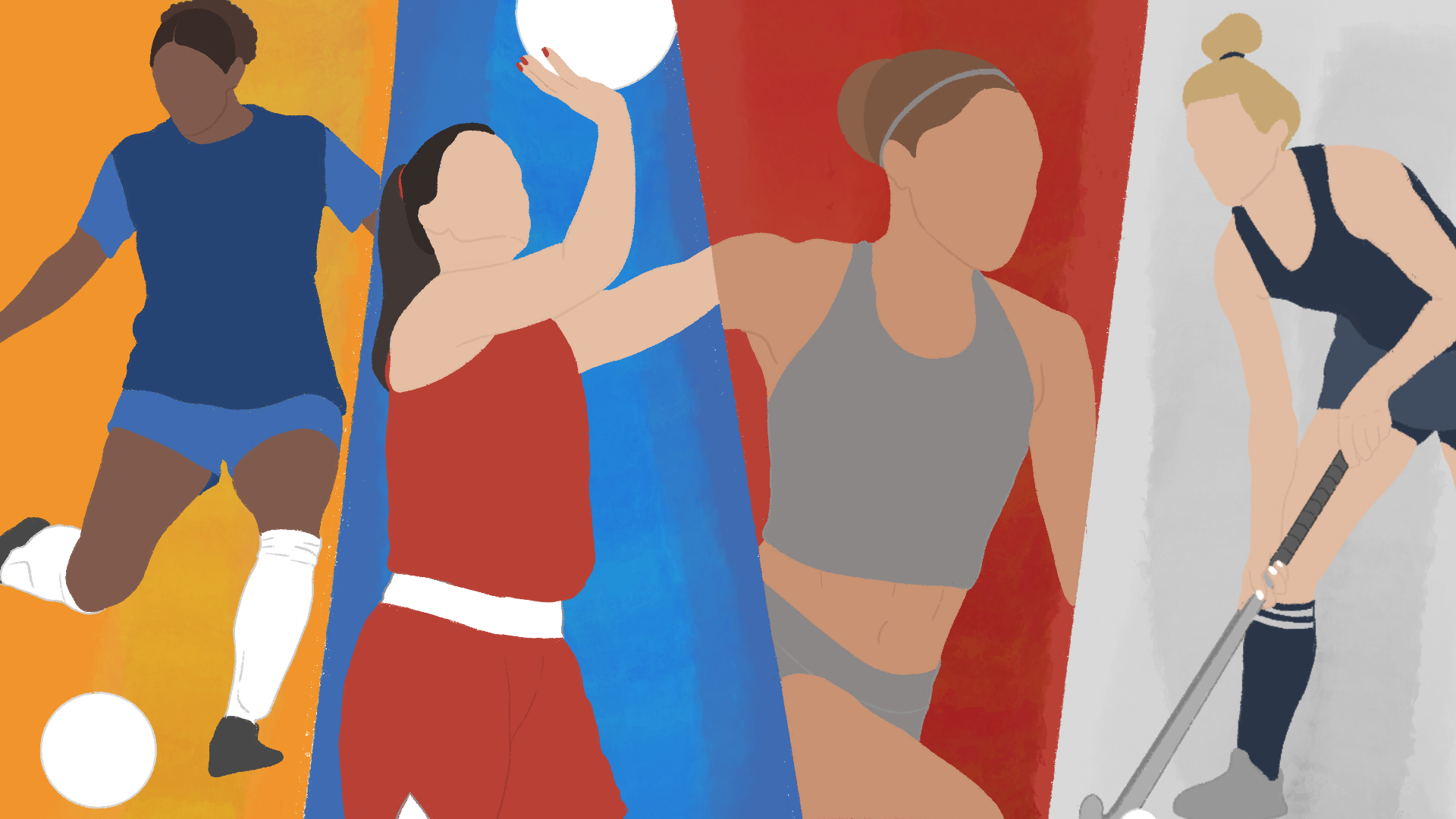
On Saturday, Feb. 7, students in 8th grade and under joined the National Girls and Women in Sports Day Fair in the New Balance Field House. The fair started at 11 a.m. and the women’s basketball team hosted Bryant at 1 p.m. This celebration included representatives from the University of Maine’s varsity programs as well as Club Team representatives that ran drills and activities from a variety of different sports such as soccer, field hockey, cheer and football.
Representatives from the Strong Girls United Foundation also joined the celebration, where their mission is to empower girls to be strong, confident and resilient through sports, mentorship and mental health programming. This program informs people that at the age of 14, girls reportedly drop out of sports at twice the rate of boys, and 40% of teens are not participating in a sport due to lack of opportunities, female coaches as role models and low self-confidence.
“It’s so important for health, longevity and a sense of belonging,” said the assistant women’s soccer coach, Tiana Bucknor. “It’s also important for women as they get older to create their own communities and become stronger women and it’s all through the foundation of sport that they find this.”
During these formative years, losing a sport can contribute to an overall loss of joy and removes opportunities for developing a healthy and active lifestyle. This affects the growth of key life skills such as teamwork, resilience and confidence.
Another aspect that affects the dropout rate of sports is the lack of female role models. Without visible, relatable and successful female athletes or coaches to look up to, girls often feel less valued, excluded and discouraged. The scarcity of female role models allows traditional gender stereotypes to persist, resulting in girls thinking that they are less capable than boys and that sports are not for them. Most teenage girls do not voluntarily drop out of sports, they are being pushed out as a consequence of deep-rooted gender stereotypes.
Overall, there is a lack of access to opportunities to play high school sports. These limited opportunities mean that girls have to look elsewhere for sports, which can be inconvenient and expensive. There is also lack of access to proper training facilities which makes it more difficult for girls to engage in sports. These systemic inequalities of limited funding, inadequate facilities and fewer programs create a negative experience.
Following the women’s basketball game, fans were invited to the court for a meet-and-greet where they could get photos and autographs with the Black Bears. It was another successful celebration to highlight the importance of women’s representation in sports. You can help girls stay in sports by donating to the Strong Girls United Foundation and spreading awareness.