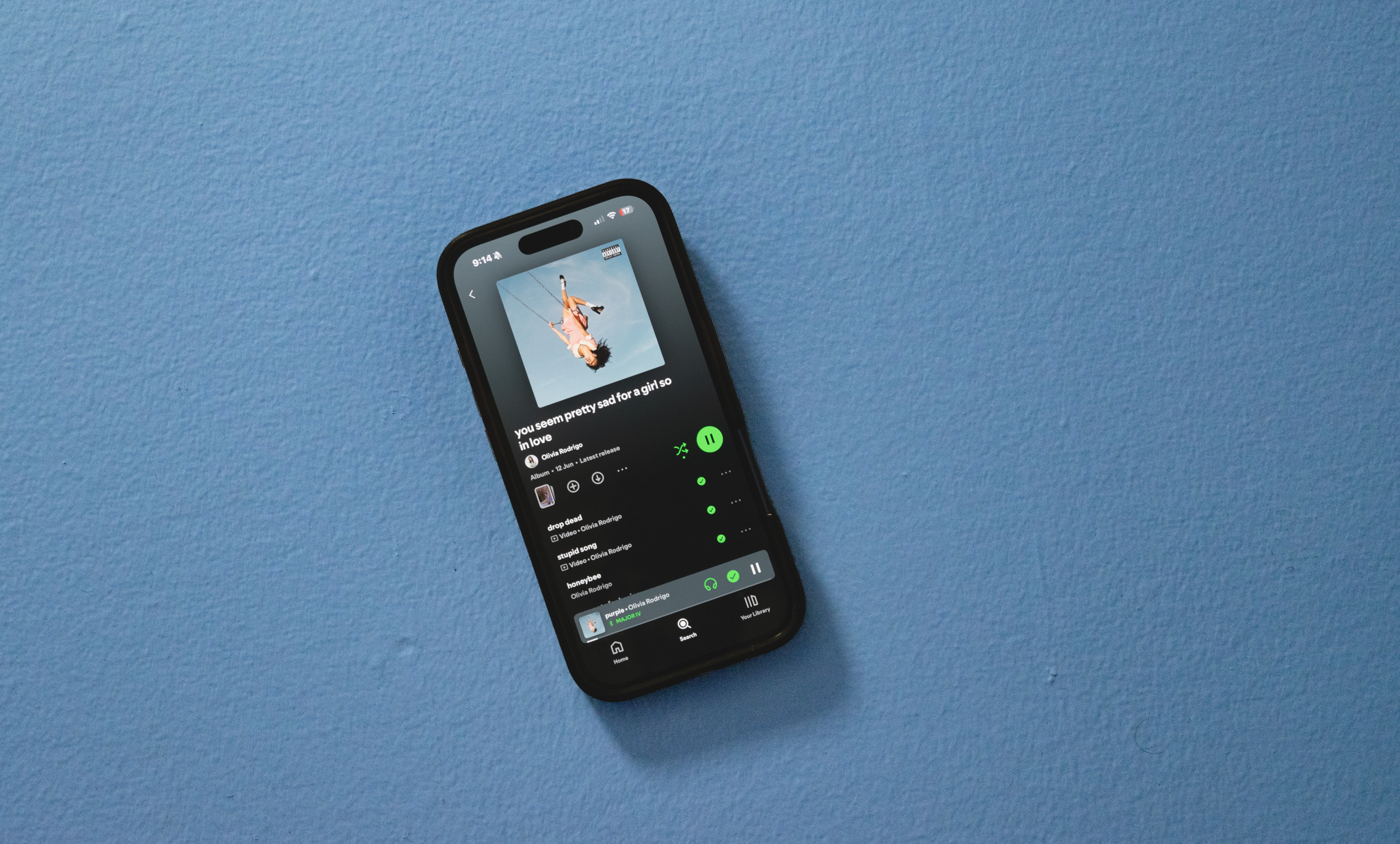
It is no secret that Olivia Rodrigo is one of the most well-known female pop artists of this generation, known for her debut album “SOUR” and sophomore album “GUTS.” Her most recent album, “you seem pretty sad for a girl so in love,” seems like a clear departure from her previous work.
Her first two album titles are fully capitalized to grab your attention in a loud way, whereas this one is all lowercase, suggesting a shift toward a calmer and quieter style. The album is split into two main storylines, with the first seven songs falling in the “a girl so in love” category and the latter six songs belonging to the “you seem pretty sad” camp. While I had heard some songs on social media, I reached out to other students on campus who may have better insight into Rodrigo’s work. I wanted to hear from people who were more familiar with her previous music and could compare this album to the sound she has established throughout her career.
Rylie Prejean, a second-year music education student, agreed that the album felt like a departure from “SOUR” and “GUTS,” specifically mentioning a single from the album called “the cure.” Prejean said that she “loved the guitar chords” and how different it was from the rest of her discography. When asked if it was her best album, Prejean said no, and that sentiment seemed to echo overall in discussions on the tracks. It’s not that people believe that “you seem pretty sad for a girl so in love” is a bad album, but it’s missing something that Rodrigo included in her other work.
One thing that came up was that the album was written during the relationship and subsequent breakup that it centers around, causing it to lack thorough reflection. An example of reflective artistry is “Midnights” by Taylor Swift. Its retrospective nature is made clear through the similes, imagery and metaphors.
As for “you seem pretty sad for a girl so in love,” it often felt as though those literary elements that make music interesting were missing. Not to say that the album is terrible, but rather that some songs, specifically in the “you seem pretty sad” section, lacked substance. Because she seemed to be writing in the middle of her relationship ending, it was hard to find the deeper reasons that she was sad. This made the second half of the album feel more repetitive because many of the songs echoed the same general feeling without adding another layer to the story. While the sadness is understandable for a raw breakup, many listeners wanted to see more development in the way those emotions were presented throughout the album.
A standout song for everyone who I talked to was “the cure,” which seems to be Rodrigo’s wake-up moment when she realized that the relationship was over. The song’s use of figurative language through lyrics such as “my head is full of poison, and my heart is full of doubt,” followed by her hope that her significant other could “suck out” her insecurities, causes her to slowly realize that another person will never embody the cure for those feelings.
This song felt like an “aha!” moment and had the clearest storytelling elements. Additionally, the music video for “the cure” ends with Olivia zooming out and stepping onto the fictional scene we had been following as she packs up a house, indicating her readiness to move on. Compared to the album’s other songs, “the cure” felt more complex because the emotions had a clearer progression and the meaning was easier to piece together.
Is this album terrible? No, but it seemed generally disappointing because it was not lyrically on par with her previous work. Not that an artist’s entire discography needs to be the same, but the lyrical storytelling was below par in comparison to “GUTS.” Moreover, this album could have been much more thought-provoking if she had started writing it months later and had time to reflect on her emotions, rather than treating the album as her breakup diary.