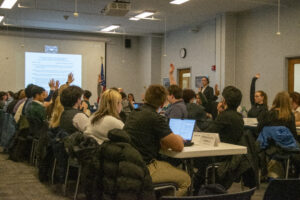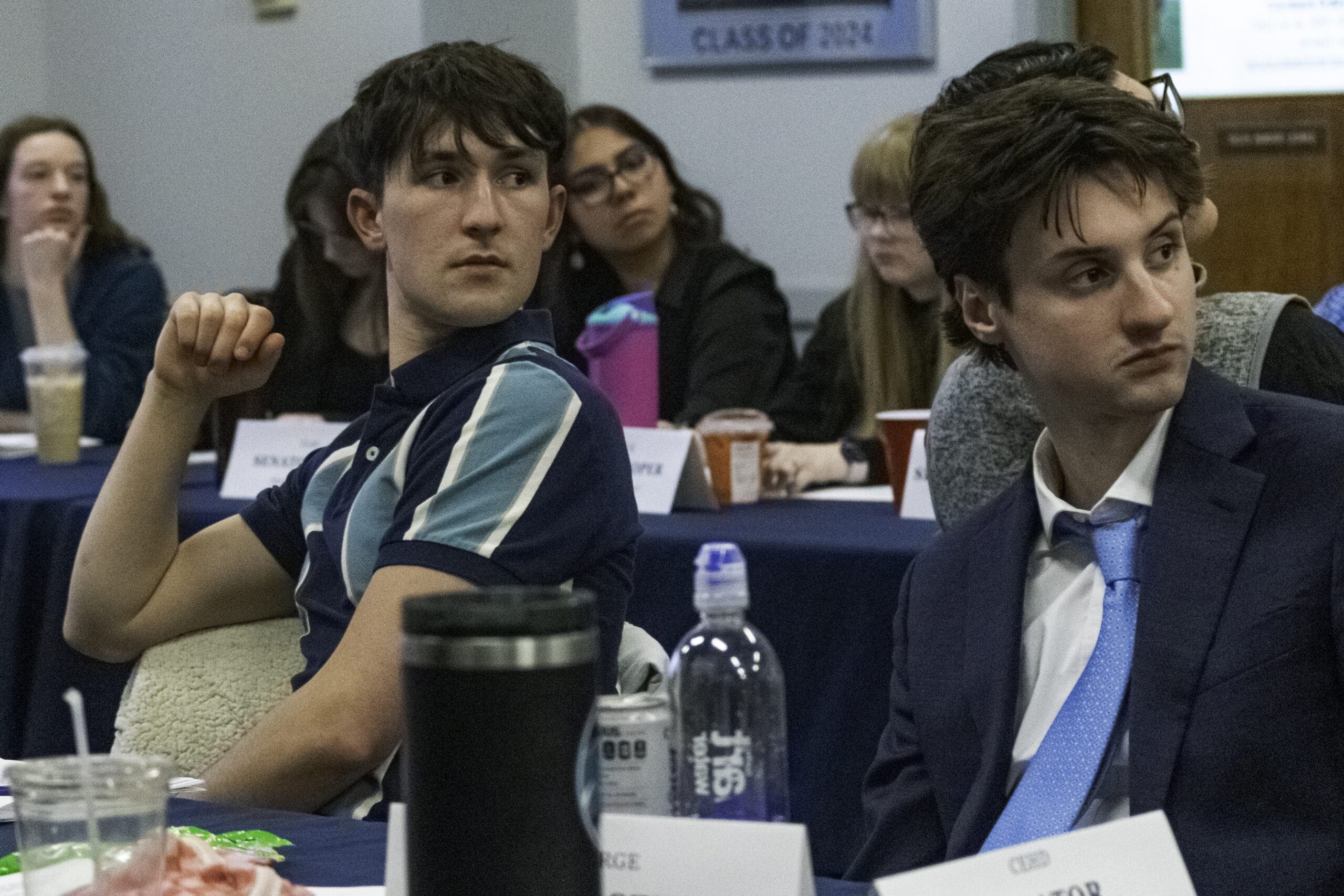
The General Student Senate of the University of Maine Student Government, Inc. (UMSG) held its fifth meeting of the semester on Feb. 17, led by President Keegan Tripp and chaired by Vice President Cynthia Shelmerdine. Senators approved several funding requests from student organizations and confirmed proposed changes to the UMSG hiring policies.
Guest Speaker
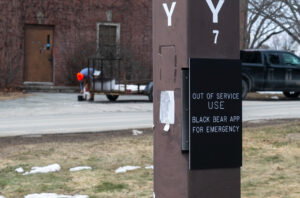
Sergeant Jamey Dover with the University of Maine Police Department (UMPD) was this meeting’s guest speaker. Dover discussed updates to safety on campus, including a revamp of the Black Bear Safety app which features a more prominent “panic button” that uses geolocation to alert authorities to potential safety issues.
He also stated that pedestrian safety around vehicles continues to be a priority of UMPD, and that they would likely try and collaborate with UMSG on promoting improved pedestrian safety.
Funding Requests
Five student organizations requested funding through the Senate, four of which were club sports. Figure Skating Club and Crew Club were granted the remainder of their tier one funding, while Men’s Ultimate Frisbee Club was given $2,033.09 to attend their sectional (held at Brown University) and regional (held at the University of Massachusetts Amherst) tournaments later this spring. White Water Rafting Club received $1,300 to fund collaborative pool sessions with Maine Bound and a swiftwater rescue program for members. Finally, Panhellenic Council asked for $4,000 to rent out the Collins Center for the Arts and put on this year’s iteration of the Mr. Fraternity talent show, which showcases talent from campus Greek Life.
All were approved by the Senate.
Executive Reports
Vice President Joshua Bohm reported that $111,933.44 remained in the Senate’s budget for the remainder of the year.
New Business
Senators considered two motions of new business: an election for the Senate liaison role to their equivalent at UMaine Machias and a resolution that brought forward a modernized version of UMSG hiring policies. Callum Velat was nominated to serve in the liaison role and faced no opposition.
The hiring policy modernization saw more consideration and was discussed for roughly 30 minutes. This bill brought about few actual changes to the hiring process and was designed by President Tripp to bring formal regulations into line with current Senate practices. The reforms were passed on the condition that the Policy and Procedure Committee resolved to bring certain amendments to the bill within two Senate meetings.