Maine is heading into another busy tick season, with hundreds of Lyme disease cases already reported this year after setting a record for infections in 2025. At the same time, the pharmaceutical companies Pfizer and Valneva report that their Lyme disease vaccine candidate performed well in a large Phase 3 trial, raising hopes for a new tool to protect people from the disease. Griffin Dill, manager of the University of Maine’s Tick Lab, and Ph.D. graduate in biomedical sciences Mary Astumian offered more information on how the lab tracks tick activity and what a future Lyme disease vaccine could mean for public health.
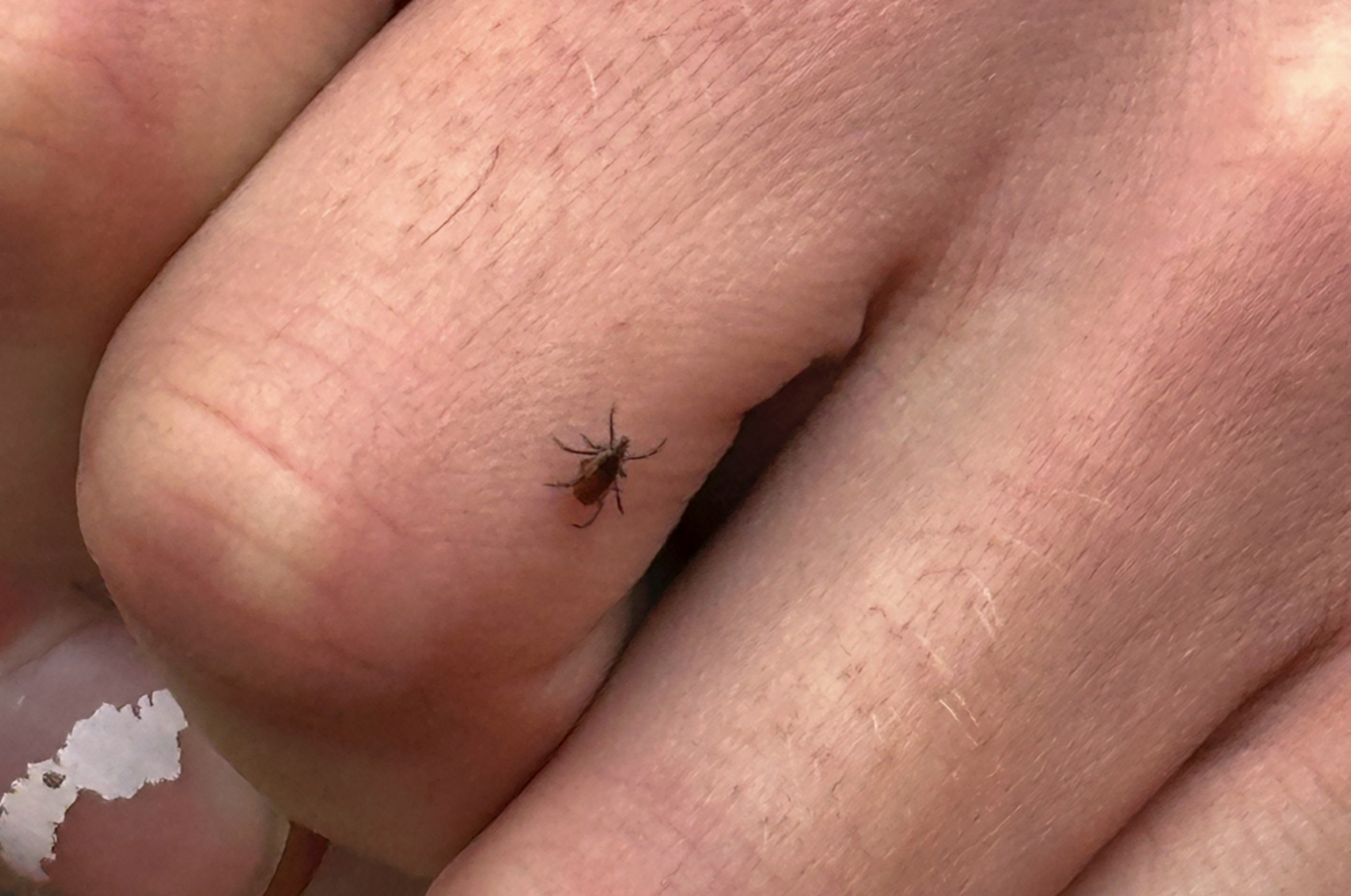
Dill said the Tick Lab monitors tick populations and Lyme risk through “both passive and active surveillance.” The lab receives ticks submitted by the public from across Maine for identification and pathogen testing, which, he explained, “helps us track where ticks are occurring, what pathogens they carry and when activity is changing.”
In addition to those public submissions, Dill shared that staff and students conduct field surveillance at sites throughout the state to “measure tick abundance, pathogen prevalence and seasonality more directly.”
On the potential impact of a Lyme vaccine, Dill said it could offer a new layer of protection for those who are at high risk of exposure — however, he cautioned that a vaccine should not replace current methods used to prevent the spread of Lyme disease.
“Even if a vaccine is approved, we would continue to advocate for a combined prevention approach that includes vaccination, continued emphasis on repellents, tick checks, prompt tick removal and managing tick populations around the home landscape,” said Dill.
Dill also emphasized that the new vaccine does not protect against all tick-borne illnesses.
“[In Maine] we are experiencing increasing rates of other tick-borne diseases including anaplasmosis, babesiosis, hard tick relapsing fever and Powassan virus.” Dill suggested that means avoiding tick bites will remain critical even with a Lyme shot.
When asked what students and community members should know about tick testing and protection, Dill highlighted preventative measures.
“Tick exposure in Maine is common and many of these tick encounters take place around residential properties,” said Dill. “It is important for anyone who spends time outdoors to take simple precautions, including the use of repellents, wearing protective clothing and conducting tick checks when returning indoors.”
Dill said that students are closely involved in the Tick Lab’s work, both in the field and in the lab.
“We are fortunate to employ graduate and undergraduate students in both our laboratory and field activities,” said Dill. “They gain experience in tick identification, pathogen testing, data management, field sampling, scientific communication and applied public health research.”
Over time, Dill has noticed a shift in how students think about ticks and tick-borne disease.
“I think there is certainly more awareness of ticks and tick-borne diseases now than there was several years ago,” said Dill. “For the most part, today’s students have grown up with the ever-present risk of ticks, whereas, this is still a novel issue for previous generations.”
If a Lyme vaccine becomes widely available, Dill expects it to show up in the classroom as well as the clinic.
“It would add an important new topic to teaching, especially around vaccine development, risk communication and how vaccination fits into integrated prevention,” Dill said, suggesting it would become part of broader conversations about how to manage tick-borne diseases.
The Maine Campus also spoke with Mary Astumian, a 2025 Ph.D. graduate in biomedical sciences at UMaine who worked as a teaching assistant helping sample ticks on campus trails. Echoing Dill’s comments, she said high risk individuals stand to benefit most from the vaccine and precautions should remain.
“Phase three clinical trials are 70% effective but one would still have to do all the work of the usual precautions of using DEET and checking,” said Astumian. “But the vaccine would be useful to horticultural workers [and] people at high risk of Lyme due to the number of hours they are in outside a tick laden environment.”
She also worries about how a vaccine might change behavior. She added that better public information on seasonal tick activity and risky locations is just as important as any future Lyme vaccine.
“I think it is likely students with the vaccine might unconsciously use it as a reason to not take other precautions and would forget about the other tick‑borne diseases unless reminded of it,” said Astumian.