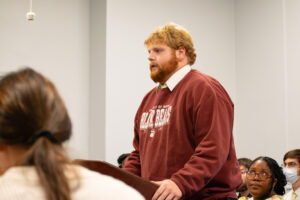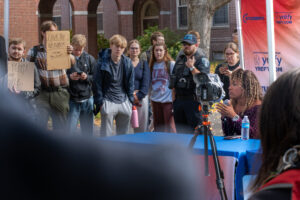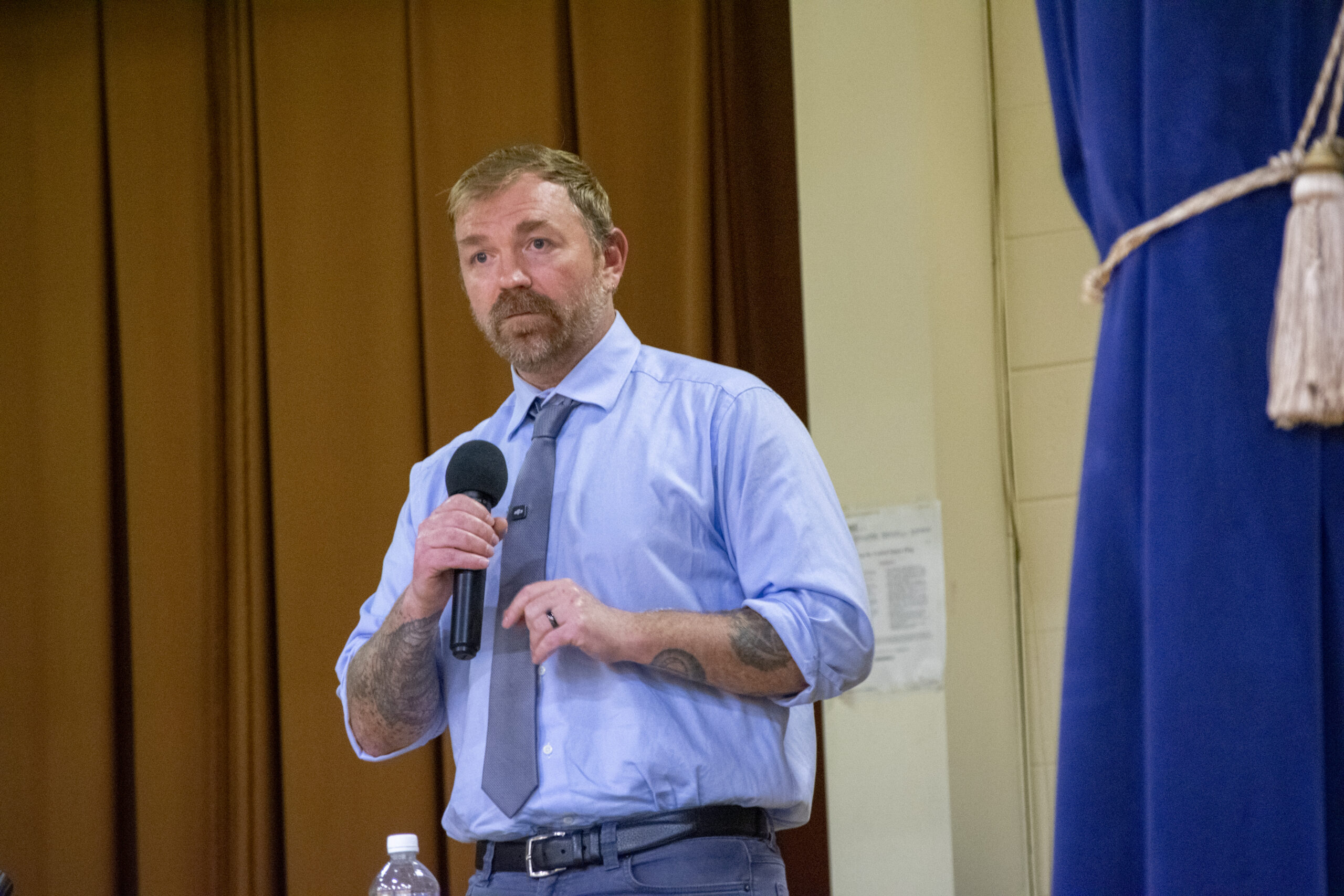
Democratic U.S. Senate candidates David Costello and Graham Platner outlined their positions on tribal sovereignty and education during a debate organized by the Wabanaki Alliance on April 16 on Indian Island in Old Town, which is home of the Penobscot Nation. The event was hosted by Penobscot Nation members and offered a chance to discuss non-partisan policy affecting Wabanaki nations and candidates’ plans to support those communities.
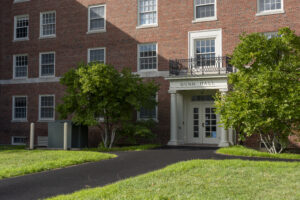
Located less than 15 minutes from the University of Maine, Indian Island sits along the Penobscot river. This reservation serves as a cultural and historical center for the Penobscot people. Within the community there are buildings and museums that reflect ongoing preservation efforts of Wabanaki culture. According to the Wabanaki Alliance, the Penobscot Nation is one of the oldest continuous governments in the world and remains committed to protecting territories, culture and language as a federally recognized sovereign nation.
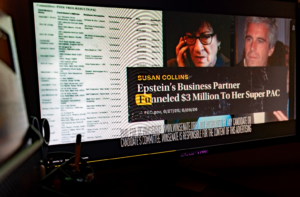
The debate was moderated by Dr. Darren Ranco, chair of the Native American programs at UMaine. Notably, Democratic candidate Gov. Janet Mills and five-term Republican candidate Sen. Susan Collins were extended invitations to participate, but were not in attendance. However, Costello and Platner offered insight on their approach to ongoing issues facing Wabanaki nations.
Opening remarks were delivered by Maulian Bryant, executive director of the Wabanaki Alliance and Chief of the Penobscot Indian Nation, Kirk Francis. Each candidate then gave a five minute opening introduction explaining why they are running.
The first round of the debate consisted of eight questions surrounding topics of tribal sovereignty, environmental justice, regulation and the implementation of legislation that would help address these issues. Costello and Platner agreed that there needs to be a restructuring of the government and a new balance of power. Both candidates stated that they would support legislation that helped extend the power to engage the Wabanaki people in issues that are important to them.
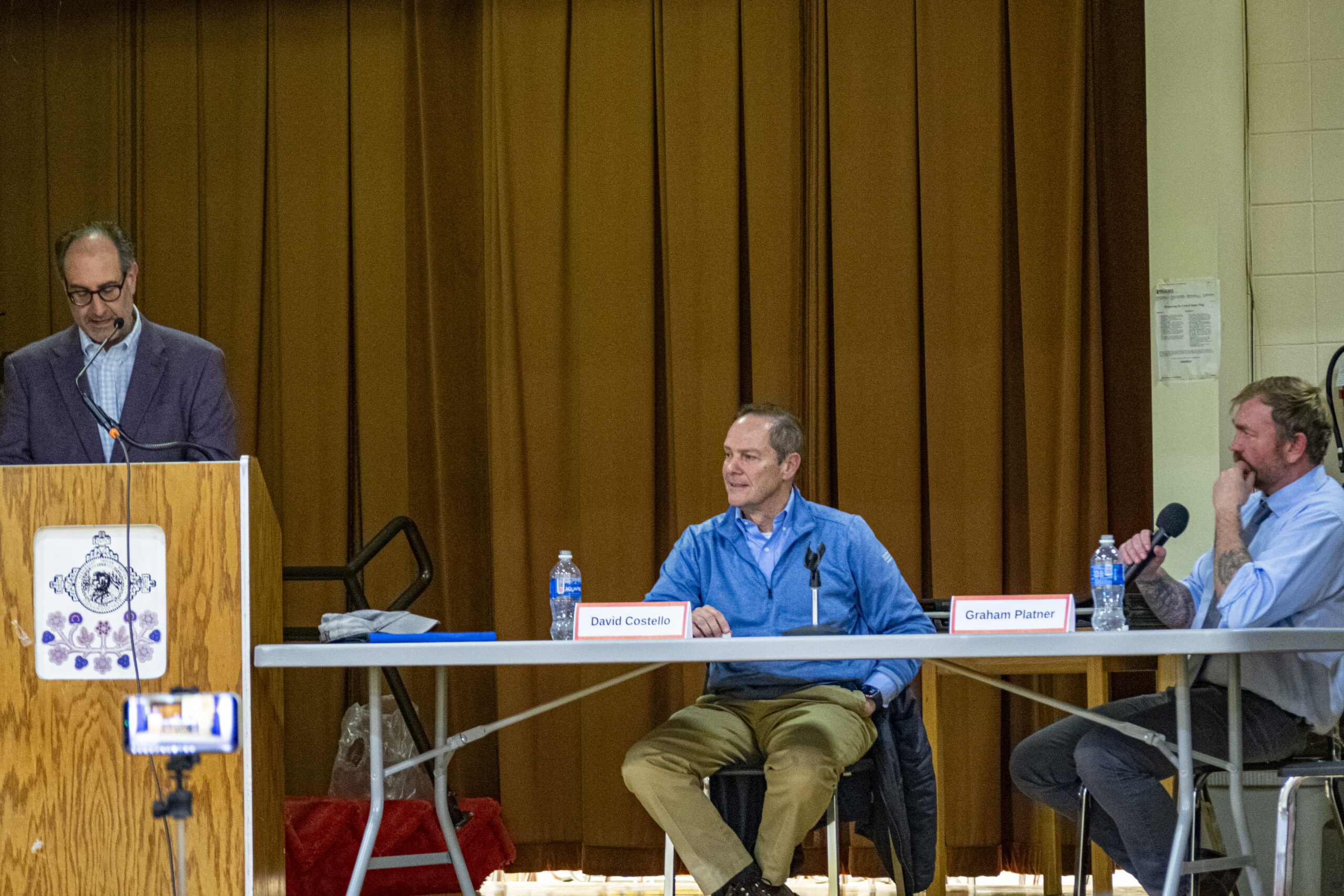
“The federal government should be putting a lot more into public education,” said Costello, adding that Maine students should learn Indigenous history “from an early age.”
“We certainly need to acknowledge what we’ve done as a nation. From an early age, it should be part of our state curriculum that no Maine student shouldn’t understand and acknowledge where we are in Maine, what Maine was like 13,000 years ago, who was here and what happened over those years,” said Costello.
Costello also offered his perspective on educating out-of-state students.
“Sharing the information with their colleagues or students from other states, that’s important,” said Costello. He encourages students to look into what kinds of clubs and organizations across UMaine are set up to promote awareness, saying that “certainly it’d be a worthy challenge and activity for those students to engage in.”
Platner responded and said meaningful change will come from young people.
“When it comes to college students specifically, I believe that any serious political movement needs to focus on building power among the youth. It’s our future. It’s the future of the young people. That is the future we are looking for,” said Platner.
Throughout his college campus visits, Platner stated he realized that many young people are disillusioned with their view of politics. They believe that they have no access to it, so it must be easier to not care. However, Platner mentioned that showing up in politics and building a positive vision of the future helps motivate young people.
“Now is the time to be engaging with them, not discarding them,” said Platner.
Costello and Platner both recognize that the issue of tribal sovereignty is an ongoing educational process that they are still learning about. Platner mentions that he wants to know what diplomatic relations should look like and wants to hear what tribal nations around Maine think. Costello said “I don’t know enough,” but that he needs to learn a great deal about the progress that is happening and the friction that is present.
After the debate, the Maine Campus also spoke to Dr. Darren Ranco, who touched on efforts that UMaine has already taken to address issues impacting Wabanaki nations. He mentioned a 2018 memorandum of understanding (MOU) that outlines agreements to “extend and elaborate upon these for mutual benefit of the Penobscot Nation and the University of Maine.” Such agreements include the care and management of cultural heritage items at the Hudson Museum and the Fogler Library.
Ranco said current efforts aim to expand communication and policy areas between both parties, such as letting tribes know when there is an environmental sampling on their land so they can label the area as culturally sensitive and decide whether or not they want to have that on their land. He emphasized that future work in improving communication will continue to strengthen the relationship between university and tribal nations.
The debate emphasized the growing importance of tribal sovereignty and the education needed to spread awareness to community members, policy makers and students. The location of the debate represented the first step in bridging the gap between engaging government and Indigenous nations in Maine. For those interested in watching, a full livestream of the debate can be found on Wabanaki Alliance’s FaceBook page.