On Nov. 20, Maine lawmakers made the controversial decision not to consider a bill that would prohibit law enforcement officers, including Immigration and Customs Enforcement (ICE), from wearing face masks while on duty. The bill, called LR 2591, was presented by Democratic Representative Grayson Lookner; the official report from Maine State Legislature describes it as “An Act to Increase Accountability of Law Enforcement by Prohibiting the Use of Masks That Conceal the Identities of Law Enforcement Officers.” According to Bangor Daily News, the proposal was rejected in a 6-3 vote and comes after a parent was detained while dropping their child off at a Maine elementary school. The parent was subsequently deported.
While ICE agents are prohibited from entering private spaces such as dorms without a judicial warrant, they are permitted on college campuses, according to U.S. News. The University of Maine’s chapter of Students for a Democratic Society (SDS) protested ICE activity on Nov. 21, and many politically active students have reacted negatively toward the rejection of LR 2591.
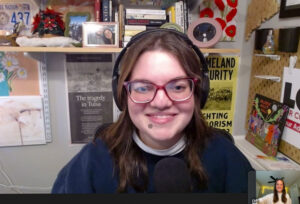
The Maine Campus spoke with Mo Drammeh, a third-year student who is a member of SDS.
“I see the decision to reject LR 2591 as a failure which, unfortunately, like many decisions made by our leadership on both the university and state level, are unnecessary and irresponsible capitulations which leave our immigrant communities uniquely vulnerable to extrajudicial persecution and violence. Once again, ICE is permitted to act without even the veneer of accountability to a degree no similar agency does, and we’ve seen the consequences locally and nationwide,” said Drammeh.
When asked for specific examples of ICE acting without accountability, Drammeh cited a few local cases involving Maine families and several national cases where college students had been deported.
“The deportation of children like Estefania and Joel Andre in Portland, the targeting of political protestors such as Mahmoud Khalil at Columbia and Rümeysa Öztürk at Tufts, and ICE’s deadliest year since the early 2000’s for those in their custody,” said Drammeh. “To understand that ICE shouldn’t be allowed to govern itself, one only needs to observe the outcome when it is.”
Drammeh added that ICE’s use of identity-obscuring masks is unconventional, despite the argument that officers sometimes require identity protection for legitimate reasons.
“It is true that federal agencies sometimes utilize identity protection for what might be considered legitimate reasons. However, we have seen the way ICE uses identity protection; that being as a baseline element of nearly all their operations as it pertains to these raids. Local police don’t wear masks; campus police don’t wear masks. Regular law enforcement activity does not necessitate the obscuration of one’s identity. One only hides their identity in the way ICE does if, of course, they have something to hide,” said Drammeh.
Drammeh elaborated on why ICE agents typically opt to conceal their identity.
“ICE agents hide their identity during these raids because their activities are, indeed, quite irregular, in addition to being morally reprehensible and deleterious to the health of any community, and they, knowing this, deliberately avoid being held accountable by the law or by society for the damage they do,” said Drammeh. “They hide their identities not to pursue justice, but to obstruct it at every turn.”
Drammeh concluded by pointing out that international students usually have a higher tuition rate than domestic students, and the university “continues to benefit from their monetary, intellectual and labor contributions.”