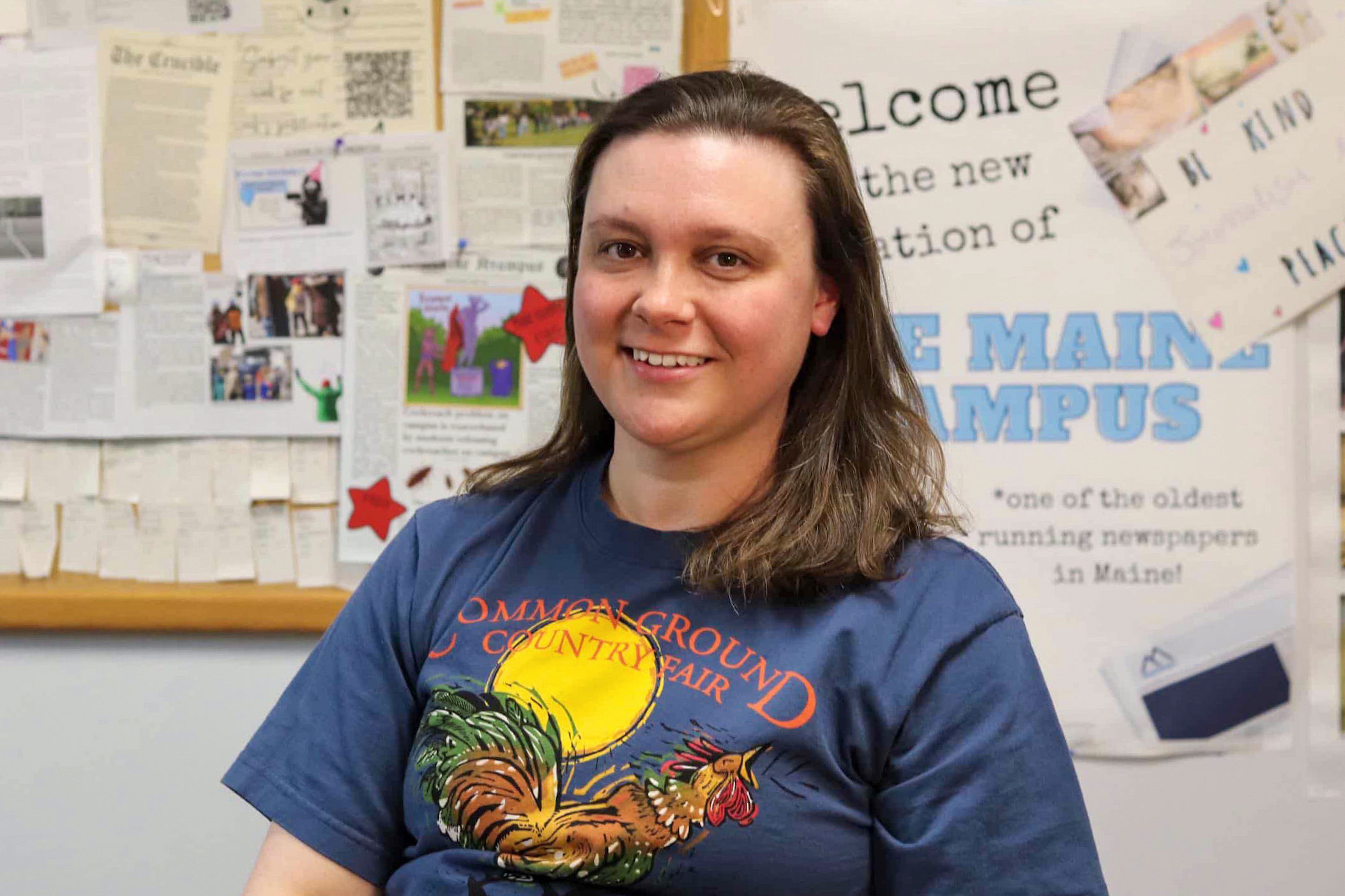
Several hours after Gov. Janet Mills suspended her campaign for the U.S. Senate and dropped out of the race, University of Maine adjunct professor Andrea LaFlamme spoke with the Maine Campus about why she remains committed to running as a write-in candidate despite mounting odds — including the wave of endorsements Democratic frontrunner Graham Platner has received following Mills’ announcement. LaFlamme said her campaign centers on reproductive rights, universal preventative healthcare and efforts to uplift working-class Mainers as the only elected union leader in the race.
LaFlamme attended UMaine from 2006 to 2010 as a human nutrition and dietetics student and then earned a master’s in public health from the University of New England in 2013. She has spent the last 13 years teaching public health and nutrition courses, including as an adjunct professor in UMaine’s Women’s, Gender and Sexuality Studies department since January 2025.
Outside her work as a teacher, LaFlamme is serving her second term as chapter president with MSEA-SEIU Local 1989, a union representing adjunct professors across Maine’s community colleges — meaning she is the only elected union leader in the race. In a social media post on May 1, she wrote that “one of the other candidates in this race likes to wear a lot of union logos, but don’t be fooled, he’s new to this game and isn’t actually a member.”
LaFlamme credits her focus on workers rights, including a push to raise the minimum wage, to her experience as “a member of the working class.”
“I made $30,000 last year with no benefits. Being an adjunct does not pay very well,” said LaFlamme. “In the time that I’ve been teaching, I’ve really seen my students struggle more [and] that’s not through any fault of their own. It is because of the economy, the way that we’re living [and] the systems of oppression that affect them.”
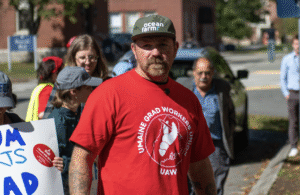
Despite her status as a union leader, she said her failure to gather the 2,000 signatures required to appear on the primary ballot was likely a leading reason unions across the state did not endorse her campaign. UAW Region 9A, the regional UAW body that includes the University of Maine Graduate Workers Union (UMGWU), publicly backed Graham Platner in October 2025. A representative from UMGWU confirmed that LaFlamme “didn’t initiate the formal process with our Community Action Program [and] we didn’t endorse her because UAW already endorsed Graham in October.”
Similarly, LaFlamme was not in attendance at an April 16 candidate debate organized by Wabanaki Alliance because invitations were only extended to candidates’ on the primary ballot. LaFlamme explained how she plans to support Indigenous communities in Maine as a “collaborative” leader.
“For their relative percentage of the population, they [Native Americans] do a disproportionate amount of work when it comes to protecting our environment,” said LaFlamme. “I think it’s important that we see them as leaders, [and that] we see them as experts in those areas and work to follow their lead.” She also said the teaching of Indigenous history in Maine schools is important and she is a “full supporter” of tribal sovereignty.
LaFlamme is best known for an exchange with incumbent Republican Sen. Susan Collins, who called police in May 2022 after someone anonymously wrote chalk messages supporting abortion rights outside her home. In a 2023 interview with the Portland Press Herald, LaFlamme identified herself as the person behind the messages.
She was inspired to act after Collins voted against advancing the Women’s Health Protection Act. The bill would have codified abortion rights into federal law, following a leak of the drafted majority opinion to strike down protections granted in Roe v. Wade. In a press release, Collins said she supports codifying protections but opposed the bill due to an absence of religious exemptions for healthcare providers.
LaFlamme also touched on why her status as a feminist candidate is important following the release of controversial remarks about sexual assault attributed to Platner. For instance, in response to a Reddit commenter defending the need for women wearing “anti-rape shorts,” he questioned in 2013 why people can’t “…just take some responsibility for themselves” and that men and women “…make a choice to consume enough of a substance to lose your self control.”
Platner has since publicly apologized for these statements and attributes his words to struggles with mental health, following military service in a hyper-masculine environment. At a March 17 press conference, he shared he was “horrified” while reading through resurfaced posts, saying that he “did not recognize in them myself or the man that I am today.”
LaFlamme shared that she is a sexual assault survivor herself and elaborated on repercussions of Platner’s comments if he wins the nomination. She said many have told her they will not back Platner because of the comments, particularly those who have “expressed to me that they are survivors of sexual assault.”
“My biggest fear is that Graham will get the nomination, Democrats will back him and will come with their ‘blue no matter who rhetoric,’ and that will make women who are victims of sexual assault feel like they have to put their feelings aside,” said LaFlamme. “It sends the message that women are not valued [and] that the stories of sexual assault survivors are not valued.”
She added that Maine has a history of strong female leadership in the U.S. Senate, and following Mills’ withdrawal, her campaign offers the best shot at continuing that tradition.
“I think it makes sense that if we are going to remove Susan Collins we need to replace her with another strong female leader,” said LaFlamme. She noted she is grateful for “all the work that she [Mills] has done to inspire young women leaders in Maine.”
LaFlamme will be hosting biweekly virtual town halls up until the primary, which students and staff can attend to connect with her personally. The next meeting will occur at 6 p.m. on May 8. Those interested in learning more can visit her website.