Election Day is approaching, which means Orono residents will soon decide which two of the four candidates running for Orono Town Council will secure seats. The candidates include incumbent Councilor Dan Demeritt, Colleen Marzilli, Devon Biggie and Daniel LaPointe.
In interviews with the Maine Campus, three of the four candidates discussed major issues facing the University of Maine community, ranging from the rising cost of living to concerns about how the university’s budget cuts could affect Orono’s economy. LaPointe did not respond to requests for comment.

Maine Campus: What do you believe are the most pressing issues facing Orono residents and University of Maine students, and how would you use your position on the Town Council to address these concerns?
Marzilli identified affordability as the greatest challenge facing residents and highlighted a general struggle for young professionals and families to obtain attainable housing in Orono. She said many are struggling to balance tuition, rent and employment and that rising property taxes are also impacting long-term residents.
“On the Town Council, I would focus on responsible municipal spending, practical approaches to housing, safe streets and sidewalks and economic development that benefits residents,” said Marzilli.
Biggie did not identify a single underlying issue facing Orono residents but said that “we are all feeling the pressures of the cost of living these days.” He said he would consider the cost of living when making decisions to avoid adding to residents’ burdens.
Demeritt pointed to an “8.2% decline in enrollment at UMaine since 2021” as a major issue resulting in financial pressures on campus and in town. He attributes this decline, in part, to the fact that “there will be fewer Maine high school graduates every spring through 2036” since many young people are “seeking alternatives” to an in-person college education.
Demeritt said that the implementation of a comprehensive plan developed over the past two years is key to addressing these concerns and “advancing Orono’s identity as a great small college town.”
Maine Campus: As students and permanent residents navigate rising living costs, what specific steps would you support to improve housing affordability and economic opportunities in Orono?
Marzilli said she would look carefully at ways to create more affordable housing in Orono through examining zoning and land use policies. She said she would support partnerships with housing organizations, developers and the university to address student and workforce housing needs.
“Students need safe, affordable places to live, but so do the people who work in our schools, healthcare facilities, and local businesses,” said Marzilli. “Families should have opportunities to purchase a home, and older residents should not feel that rising costs are forcing them out of a community they love.”
Biggie said there is “a lot of potential [for] growth in the local area” and that Orono has the ability to increase the number of single-family and rental homes while “keeping use of our natural resources available.” He expanded on ways to stimulate needed growth.
“Being able to bring in businesses like Tyler Technologies allow Orono to provide employment for those young families moving to Orono, while assisting with the tax burden on the current residents.”
Demeritt emphasized that Orono’s current comprehensive plan focuses on increasing attainable housing for young people, families and seniors. He said the council is planning “a major rewrite of Orono’s land use controls” and will partner with developers to “bring more attainment housing into the parts of town that are walkable and served by utilities.”
Demeritt also said the council needs to help entrepreneurs and owner-operated businesses that “leverage the Orono brand,” citing Orono Brewing Company and the Golden Bean Cafe as examples.
Maine Campus: With the University of Maine facing a projected $19 million budget shortfall and planning faculty retrenchments and staff layoffs, what concerns, if any, do you have about the potential impact on Orono’s economy and community?
Marzilli said that this issue affects everyone who lives or works in Orono, and that “when we talk about eliminating positions, we are talking about people.” She emphasized how changes at UMaine significantly affect Orono’s economy.
Marzilli also expressed concern about how reductions in faculty, academic programs and support services could impact students’ ability to complete their degrees. She said the Town Council should maintain communication with university leadership and prepare for potential impacts on local businesses, housing and employment.
Biggie said that while he is concerned about potential layoffs and their impact on students, there is little the town can do to address the situation in the short term. He emphasized the importance of expanding housing opportunities and encouraging new businesses to establish themselves in downtown Orono to help offset potential economic losses.
“Orono and UMaine live together, you can’t really have one without the other so as Orono grows strong I would like to believe UMaine would as well,” said Biggie.
Demeritt identified the potential loss of university jobs as his most immediate concern, noting that many positions in higher education are highly specialized and that affected employees may need to relocate to find new employment.
“I am optimistic that we will modernize the partnership between UMaine and Orono over the next couple of years to help achieve savings in terms of service delivery and find new ways to generate revenue for the university and the town,” said Demeritt.
Maine Campus: Why are you an ideal candidate to represent the interests of University of Maine students and other Orono residents on the Town Council?
Marzilli believes her experience as a nurse practitioner, paired with experience in business and executive leadership, makes her an ideal candidate. She added that being accessible to residents is a priority.
“I will not always have an immediate answer, but I will listen, do my homework, and be straightforward about where I stand,” said Marzilli.
Biggie said he is a strong candidate because he has been both a student and a resident, having graduated from UMaine in 2017 with a bachelor’s degree in mechanical engineering and then returning to raise his family.
“Being able to see both sides, I believe, is one of my stronger attributes since it helps me bridge the gaps between the two larger communities and do the best for both demographics,” said Biggie.
Demeritt said his commitment to making Orono a successful college town and encouraging community participation in local government are some of the top qualities he brings to the Town Council. He cited his ability to work collaboratively with other council members, pointing to the council’s record of reaching unanimous decisions on 98.2% of its 272 recorded votes since the last election.
“Agreement is no accident and is rarely the starting point,” said Demeritt. “We achieve consensus because of the expertise and trust we have in Orono’s municipal team, the input of community members, and our shared commitment to listen, learn, and serve Orono.”
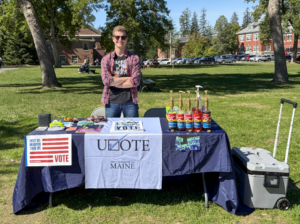
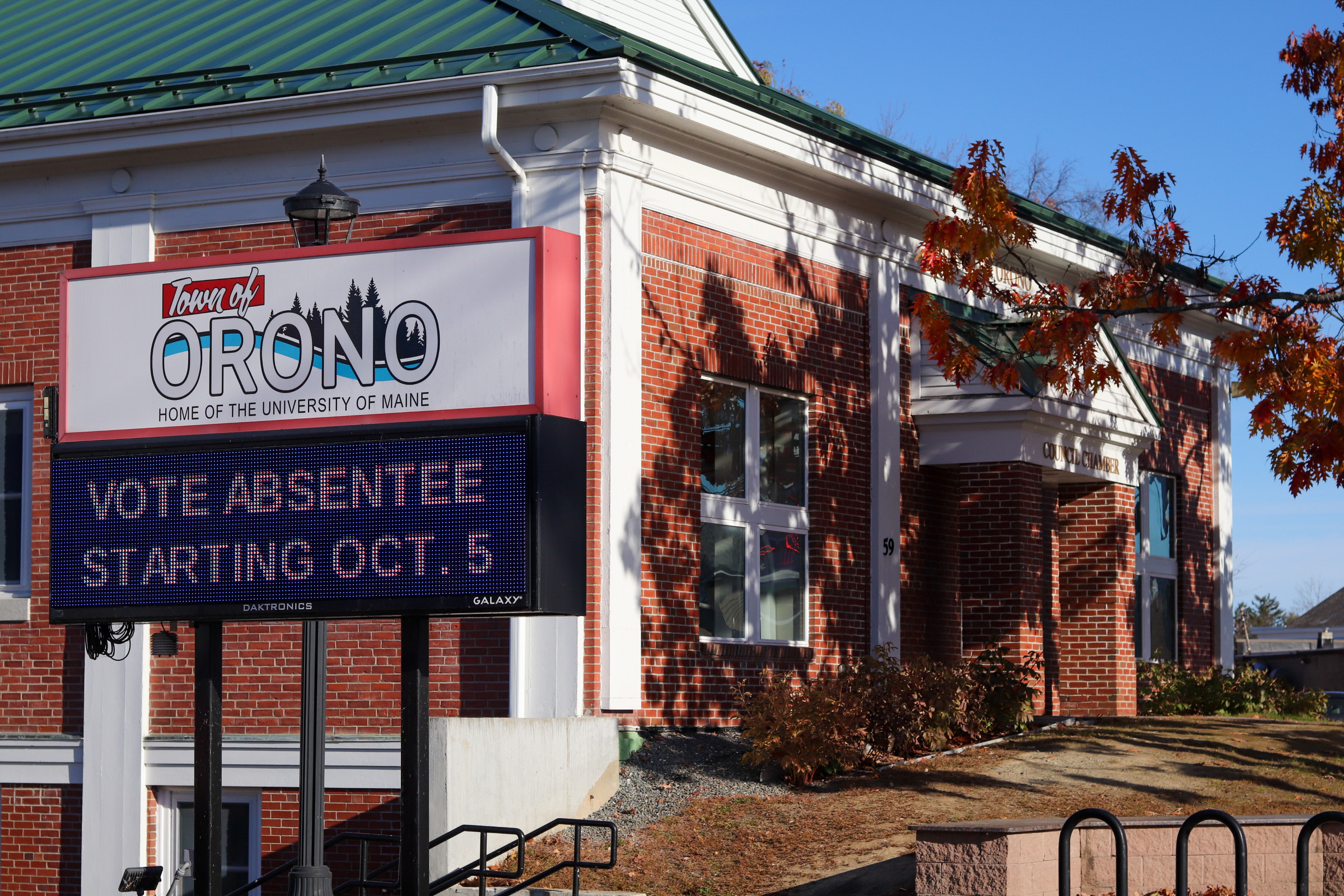
Early voting is available at the Orono Town Office through Oct. 29, with Election Day voting scheduled for Nov. 3 at the New Balance Field House. To learn more about the upcoming election, students can visit UMaine UVote’s guide or information listed on the Town of Orono’s website.
Those interested in learning more about each Orono Town Council candidate can also review Orono’s recent Candidates’ Night debate on YouTube.