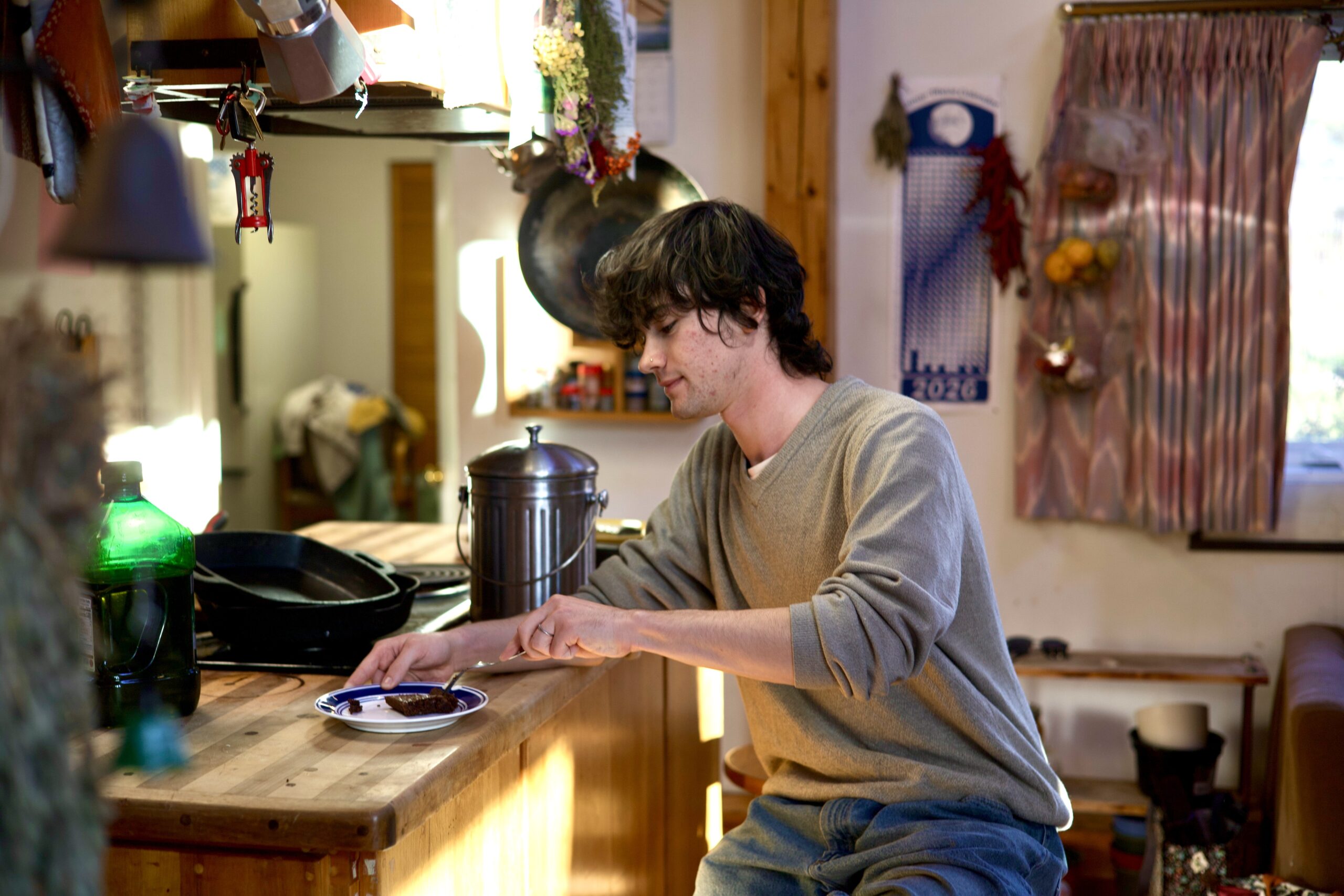
The University of Maine’s Terrell House Permaculture Living & Learning Center serves as a student-led living and learning community, where residents maintain a community garden, organize educational events and promote sustainable living. Besides providing housing for a small group of students, the house welcomes members of the campus community to participate in gardening activities and other events. Over the years, these activities have helped establish traditions that current residents continue to maintain.
The house’s history as a space for sustainability-based experimentation stretches back more than a decade. In an earlier article for the Maine Campus, Danielle Walczak described its origins:
“Just off College Avenue, there is a white house which sits on a quarter-acre lawn surrounded by trees. It was originally an energy systems experiment conducted by two University of Maine professors, a contractor and several graduate students and used for interdisciplinary research,” wrote Walczak, as the Terrell House began its now-famous open gardens.
“This is my first and last year at the Terrell House, sadly, but I have been a witness to the club and a member since my freshman year — this is one of the first activities or clubs I ever came to. It really set the tone I think for my experience at UMaine,” said Autumn Carmona, a fourth-year botany student with minors in both horticulture and sustainable agriculture. Carmona recalls how her introduction to Terrell House showed her the kinds of communities built by students, for students. Now, three years later, she has had the chance to bring this effort back around to current first-year students.
“When I was a young man, like a boy, I had a very unhealthy view of people who organized events. I sort of thought that they were omnipotent masterminds, like they’re doing all this organization with no issue and they know what’s going on. Seeing Terrell House at first, I thought that was the case, but now that I’m here I see that we’re always flying by the seat of our pants. The amount of events that have come together last minute is incredible,” said Stanley Carter, a third-year botany student. Carter talked about the realization that because everyone is so busy in college, no one truly has the time to do everything perfectly, and waiting for the perfect moment means you will never start.
It became clear very quickly when interviewing the members that the core of Terrell House is its tradition. Everyone who has lived in the house has left an indelible mark, whether their name is remembered or not.
“I remember coming in and seeing the garlic curing on the spiral staircase, and so this year I suggested we do that again because I remembered seeing it and it worked pretty well for us,” Carmona said. “I think having a place that, in its founding, cares about tradition is a wonderful thing and I think we should be doing more of it.”
Although it is tucked just off the street and only a small part of the student body frequents it, Terrell House holds the kind of community so many college students search for. Its space is beautiful, with a three-story ceiling, numerous couches and a wide space in the living area. It’s a home. The events have no barrier to entry; the residents simply want people to be involved.
“I really like those events where people can feel welcomed and like they experienced something real — like in real life, like not just on their phones,” Carmona said, reflecting on an event she recently hosted that was met with wide appeal.
“Having just turned 21, and with Henry [senior resident] about to move out, I’m kind of appreciating the fact that I’ve worked through a lot of my college experience and still have a lot more to do. I’m looking forward to that and I’m worried about becoming jaded as I go forward. But either way, I’m still moving forward,” Carter remarked, as his first semester at Terrell House comes to an end.
Whatever your level of expertise in gardening, Terrell House presents itself as a place where a student-led community thrives. For almost a decade and a half now, it has sat offering itself to students. A few put in hard work to keep the machine running, and many are able to partake in its motion.