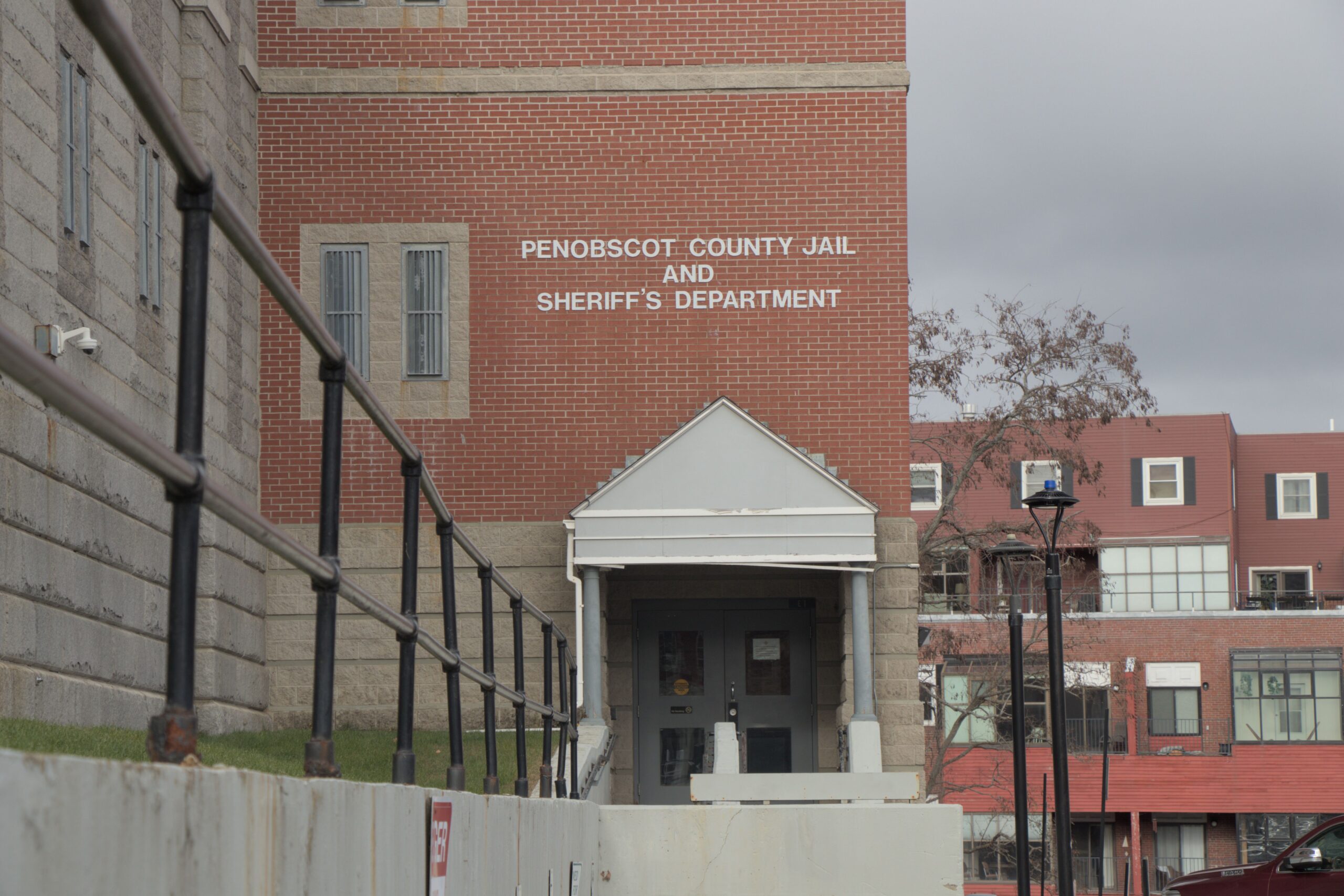
Following debate between Penobscot County officials and local organizations, a referendum to remove the restrictions on where the county jail can be placed failed by 136 votes out of 64,870 votes cast. Proponents of the referendum argued that the condition of the jail and its low capacity made a new jail necessary, while opponents argued that expansion would not address the root causes of incarceration and that it would only compound them.
The current jail has a maximum capacity of 157 inmates and regularly receives additional prisoners, which it must pay to have housed in other jails at a cost of $100 per person per day, Penobscot County Commissioner Dave Marshall stated publicly. The county is now considering a proposed modular jail as a replacement.
The Maine Campus reached out to Bangor City Councilor Susan Faloon for comment. Faloon clarified that she did not speak on behalf of either Penobscot County or the Bangor City Council.
“There are a couple of reasons for the referendum being on the ballot, including the condition of the jail. It’s beyond repair, frankly; they’ve been holding it together with duct tape and bubblegum. They can’t repair it, though they’ve tried — it would ultimately be too costly,” said Faloon.
Faloon voiced support for the referendum on the basis of the capacity problem and the jail’s condition. She also expressed surprise at the referendum’s failure, attributing it in part to voters having a lack of information as well as the concern that property taxes would increase as a result of a new jail.
“It’ll cost more up front — there would need to be a bond for the jail issued — but in the long run, it’ll result in cost savings,” she said.
Faloon said she believed the county would continue to push for a new jail and that she was interested to see what the next steps would be.
“There’s no ifs, ands or buts about it: we’re going to need a new jail,” said Faloon. “There are people who are pushing against it because they believe that if we had more services, jail expansion would be less necessary. Because we don’t have services in place to help these people, they get taken to jail, and that’s actually a lot more costly than it would be to provide the services. But that’s not something that’s going to happen overnight, and so, meanwhile, we still need the jail.”
One group that campaigned for the referendum’s failure was No Jail Expansion, a grassroots organization advocating for diversion programs and decarceration instead of expansion. Diversion programs provide opportunities to avoid jail time in exchange for completing certain programs that are intended to reduce recidivism.
“Prison and jail temporarily reduce criminal behavior through incapacitation (taking away the ability to commit crimes in the community); however, those effects largely disappear upon release, with little to no evidence of deterrence or rehabilitation,” the group states on their website. “In contrast, decarceration strategies appear to be equally or even more effective and more sustainable for promoting long-term public safety than continued reliance on incarceration.”
Faloon cited the modular model as increasing efficiency, as it would give staff a better view of the cells within the prison. No Jail Expansion cites this as a concern in an article on their website, arguing both that the jail’s smaller size incentivizes lower incarceration rates, which they view as compounding issues such as substance abuse and poverty, as well as that a modular model could result in further expansion at a later date.
“The need to address overcrowding has led to increased use of pre-trial services. If someone is in jail and can’t post bail, pre-trial services can screen them to see if they present a risk. If not, they can safely be released and supervised at home by the pre-trial service provider. This keeps people from losing their job, home, children or medical care during a time when they have not yet been convicted of any crime,” reads the No Jail Expansion website. “The proposed jail will house more people. If it is constructed using modules, it may be able to be expanded further. Yet it will never be enough to solve the problems that jail is not built to solve — poverty, homelessness and drug use disorders.”
Despite the referendum’s failure, Commissioner Marshall has stated that the county still intends to pursue the construction of a new jail.