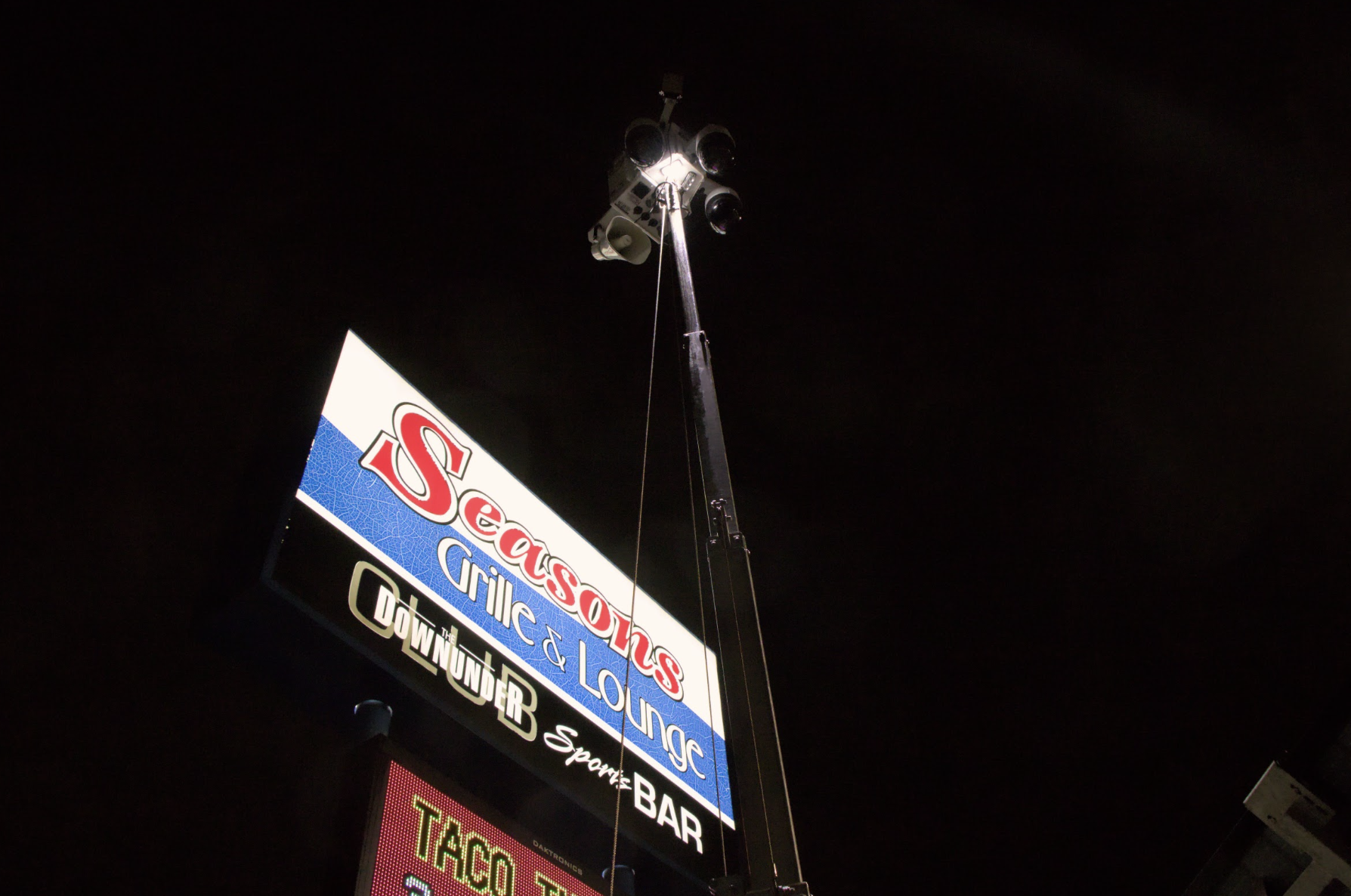
OPINION: Automated license plate readers (ALPRs), more commonly referred to as Flock cameras, have been making headlines for months now. While many claim they are a necessity and the next step toward protecting public safety, a fair share of people see them as a threat to privacy and a product of government surveillance.
As it stands right now, there are currently an estimated 102 operational Flock cameras in the state of Maine. While this would rank Maine 47th out of 52 U.S. states and territories in terms of Flock camera surveillance, the state has certainly experienced its share of issues with the product.
The Brewer Police Department recently released a report detailing an instance in which its ALPR systems were using stored data beyond the 21-day limit allowed by Maine state law. Brewer’s director of public safety, Chris Martin, claimed he was given no warning that this was taking place, and upon finding out, he decommissioned the use of these ALPR cameras.
“The issue that I had was we never got a phone call,” Martin stated in a Sept. 9 interview with WABI. “We were still operating under the assumption that this was working properly.”
Martin expressed his disapproval of the situation, shifting the blame toward the vendor, stating they were “unable to hold up their end of the bargain.”
While it is still unclear why data continued to be stored and what the data was being used for, it is just one of many examples in Maine and across the country where these cameras pose a threat to public security.
In states such as Florida, Flock cameras have been used by police to stalk individuals by following their travel patterns. Jamarus Brown, a police officer trusted with upholding public safety, was reportedly accused of using Flock cameras to track his former girlfriend’s activities. Brown would later be arrested and sentenced to five years’ probation on charges of accessing a computer or electronic device without authority and misdemeanor stalking.
In North Carolina, police officer Elizabeth Snowman reportedly used Flock camera systems to track her boyfriend’s ex-wife. She, too, would later be arrested and charged with accessing a computer or electronic device without authority.
This repeated systemic misuse across multiple states has shown the gross negligence of people whom we are supposed to trust with upholding the law and is one of the reasons why we cannot trust this technology in our neighborhoods.
Whether it is the people operating the technology or the technology itself, it is clear that there are far too many issues to consider when talking about Flock cameras.
Many state and federal officials agree with this statement as well, raising concerns about the technology. Newly elected Maine Sen. Troy Jackson said if allowed to vote for a Flock ban, he would do it. Jackson stated, “We don’t know what else they’re using the data for. I don’t like that, and I would vote against it. I think we have to rein in big tech on a bunch of this stuff.”
This technology has raised many red flags across the state and has pushed cities such as South Portland to cancel their contract with Flock and remove all existing cameras from the area. Furthermore, the town of Fryeburg’s select board unanimously voted against the funding of Flock cameras and is going so far as to seek a permanent ban on the technology. During public comment, one resident described the technology as “Surveillance on everyone for a minority that might be stepping out of line.”
It’s worth noting that Flock cameras have definitely proved useful in many cases. In Centerville, Ohio, police used Flock technologies to track down a suspected armed robber in a case they claim had “few leads.” Centerville police used these technologies to track a car connected to another robbery a few towns over, later backtracking and using the information to find a suspect.
While I think that is certainly noteworthy and important in showing that these technologies have provided a public service, unfortunately, it does not negate the numerous cases where these technologies have failed us.
At the end of the day, the repeated misuse of this technology has shown the dangers it can pose to society. If we cannot trust the people using the technology or the companies providing it, we cannot trust the technology itself. It is for these reasons that we must do everything in our power to keep ALPRs and Flock cameras out of our state and neighborhoods.