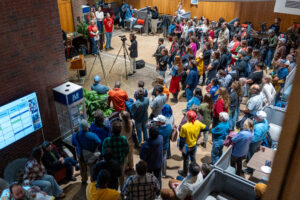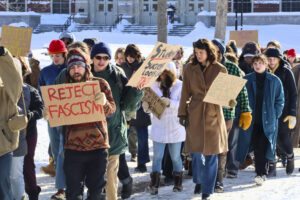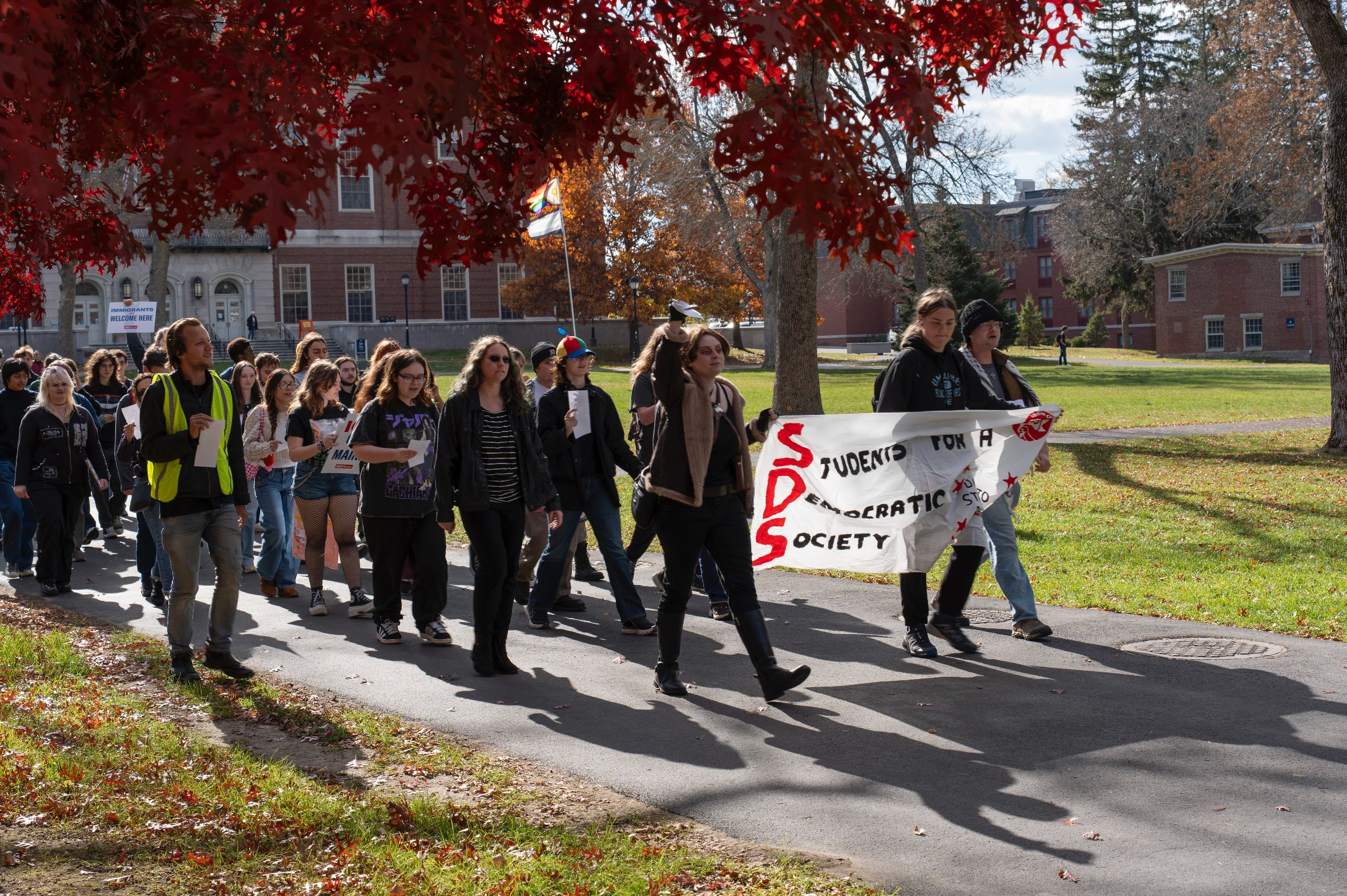
On Oct. 30, Students for a Democratic Society (SDS), a progressive student activist organization at the University of Maine, led a “March Against ICE” protest on the steps of Fogler Library to speak out against U.S. Immigration and Customs Enforcement (ICE). During the march, current and former faculty members, student organizations and SDS members spoke with the Maine Campus about the importance of protests in fostering civic engagement.
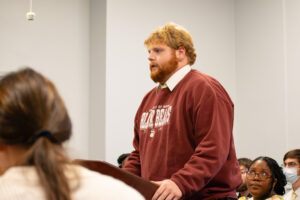
Four SDS members spoke at the event and President Gabriel Veilleux said the protest took three weeks to plan. He began his speech by leading the group in a chant: “Winter is coming, salt the ICE.”
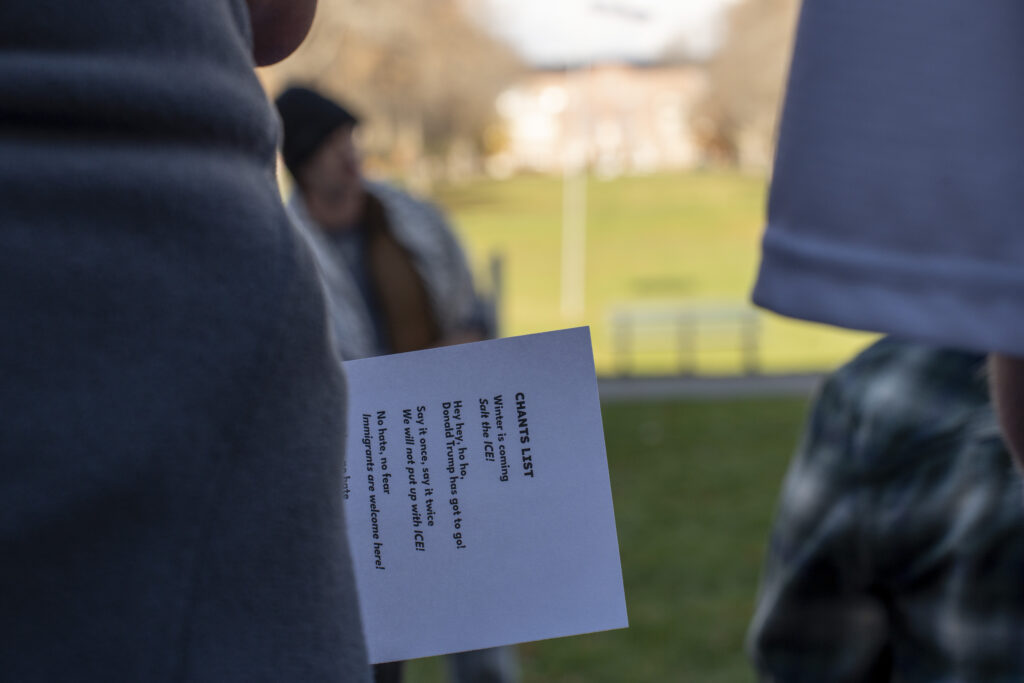
Veilleux began by stating that SDS wanted to present concerns to UMaine President Joan Ferrini-Mundy in April, but according to Veilleux, those concerns have remained unaddressed since then. He said that SDS tried to meet with the president throughout the summer and this semester but received no response from the administration.
“We are hoping that this protest can land us attention with admin and make our asks very clear. We’re hoping that this action specifically can land a meeting with admin and open dialogue to what our goals are,” Veilleux said.
Veilleux said SDS would continue its efforts until members were granted a voice and the learning environment was safe, something the organization believes has not been guaranteed.
Veilleux said SDS plans to continue protesting despite these challenges, stating that “rain or shine we are still going to turn out, because it’s really the cause that’s important to us.”
“We strongly believe that admin needs to do a better job communicating with the student body. We believe that distinction between public and private spaces should really be marked on campus so students can know where their legal protections extend to,” Veilleux said.
Veilleux encouraged students to get organized as a way to stay involved and mentioned that he helped bring SDS back to campus after almost 60 years. The group meets on Tuesdays at 6:30 p.m.
One of the speakers, Sofia Carrasquillo, a member of SDS and an officer in the Caribbean and Latinx Student Alliance (CALSA), was the third to speak. Carrasquillo said everyone should have the freedom to exist without having to consistently defend that freedom. She also mentioned that although the system cannot change in one day, she was grateful for the presence of those who attended.
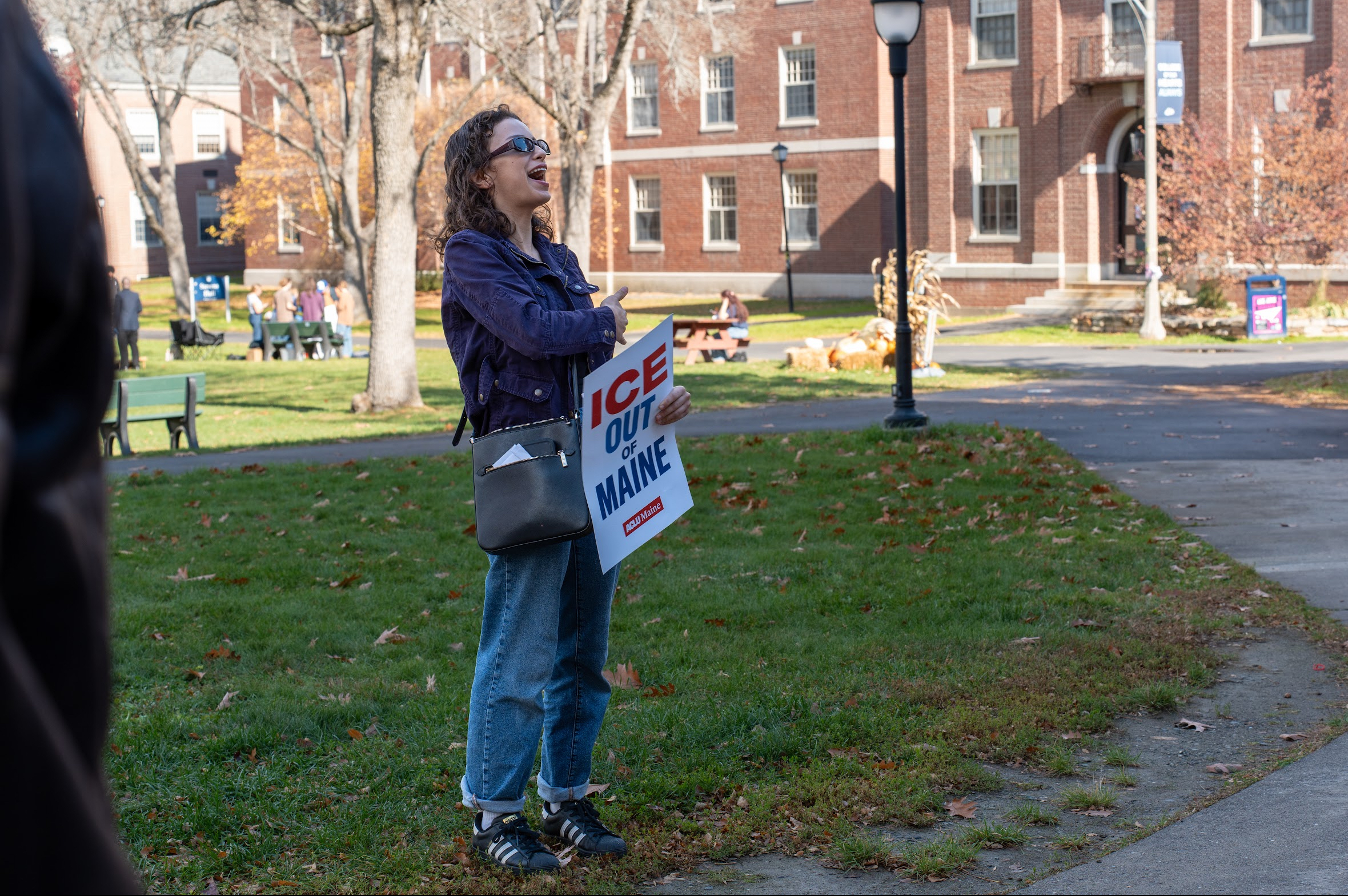
During the march, Stephen Coghlan, a wildlife ecology professor at UMaine and the adviser for SDS, discussed how faculty should respond to the ongoing political climate.
“We have a responsibility in an institution here of learning and open inquiry. Freedom of thought, freedom of speech, freedom of questioning,” Coghlan said. “We have much more important things to worry about than our grants.”
Coghlan recognized that while some instructors, adjuncts, teaching assistants and students lack job security, those who feel comfortable speaking up should do so.
“We have the power but we’re not using it as a whole faculty,” Coghlan said. “If they are silent, they are complicit.”
Doug Allen was a professor of philosophy at UMaine for 46 years before retiring from full-time teaching seven years ago. Allen described himself as “retired but still active” and continues to attend marches and other civic engagement events in his community.
Allen said he is not afraid to speak about what he believes but recognizes that although some professors remain silent, it takes courage to get involved.
In a conversation with the Maine Campus, Coghlan and Allen agreed that while it is important for faculty to remain involved and not stay silent, there are different ways of doing so without necessarily blaming one party.
“We have to organize to have a voice. You have to have a voice and that’s what SDS is doing, trying to reclaim that you’re not just a student. It’s important to have your own voice, that people hear you and they take seriously what you have to say,” Allen said.
CALSA officer Micaela Cateriano attended the march and spoke about the importance of Latin representation on campus.
“We need to be present for the people who can’t be here because they fear that their faces are going to be in public. Sofia and I feel comfortable enough to be here for our loved ones that are not here right now, and important to show the people that we are a big, powerful community here and they are more than welcome,” Cateriano said.
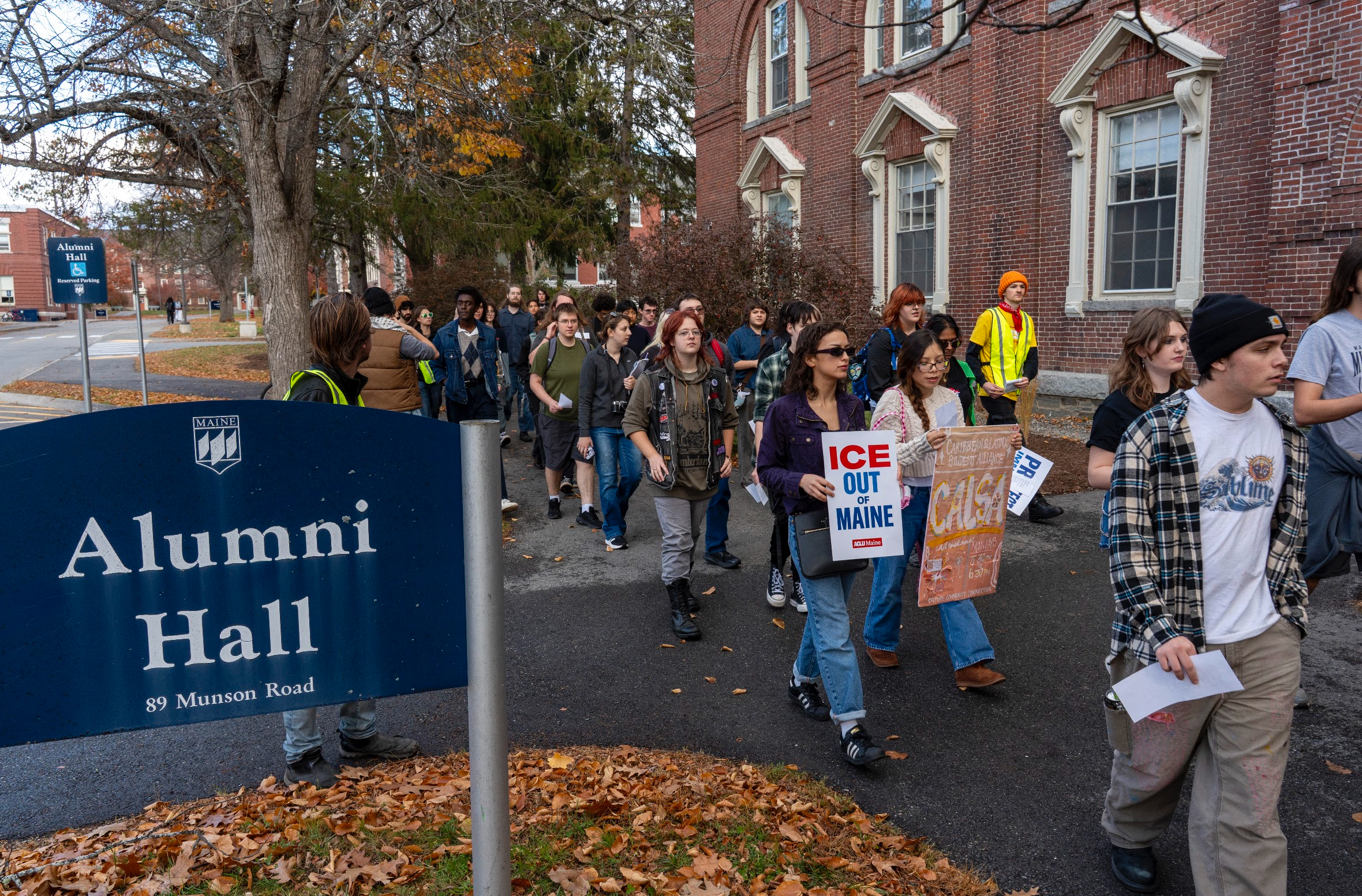
CALSA meets Mondays at 5:30 p.m. in Room 312 of the Memorial Union.
The Maine Campus also spoke with three students who shared their opinions on why students should be involved in activism.
SDS committee organizer Wyatt de Mott said that when people get involved with the campaign, it “keeps the energy up,” giving students a chance to communicate important concerns to university administration.
Antonio Tobias Berletti said that while he does not attend meetings often, he remains active in SDS events. Berletti believes that as society grows tired of an older system, people are beginning to organize as a way to break out of the political system.
“I show up because I think it is important to get involved, to show your solidarity with oppressed people everywhere. Every struggle is a struggle worth dealing upon,” Berletti said.
SDS member Matt Hinds believes protests are important in the face of continued media coverage surrounding “the terrible things ICE is doing.”
“It doesn’t have nearly as much weight as when there’s a large group of people chanting against it and making their voices heard and giving speeches. It’s important to say people are upset about this. We want policy changes, please at least meet with us,” Hinds said.