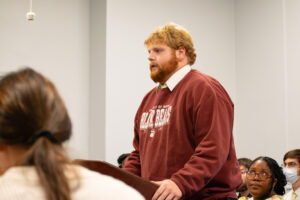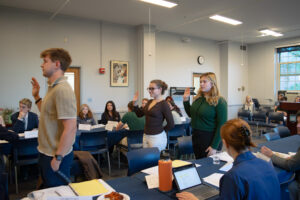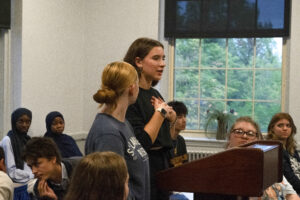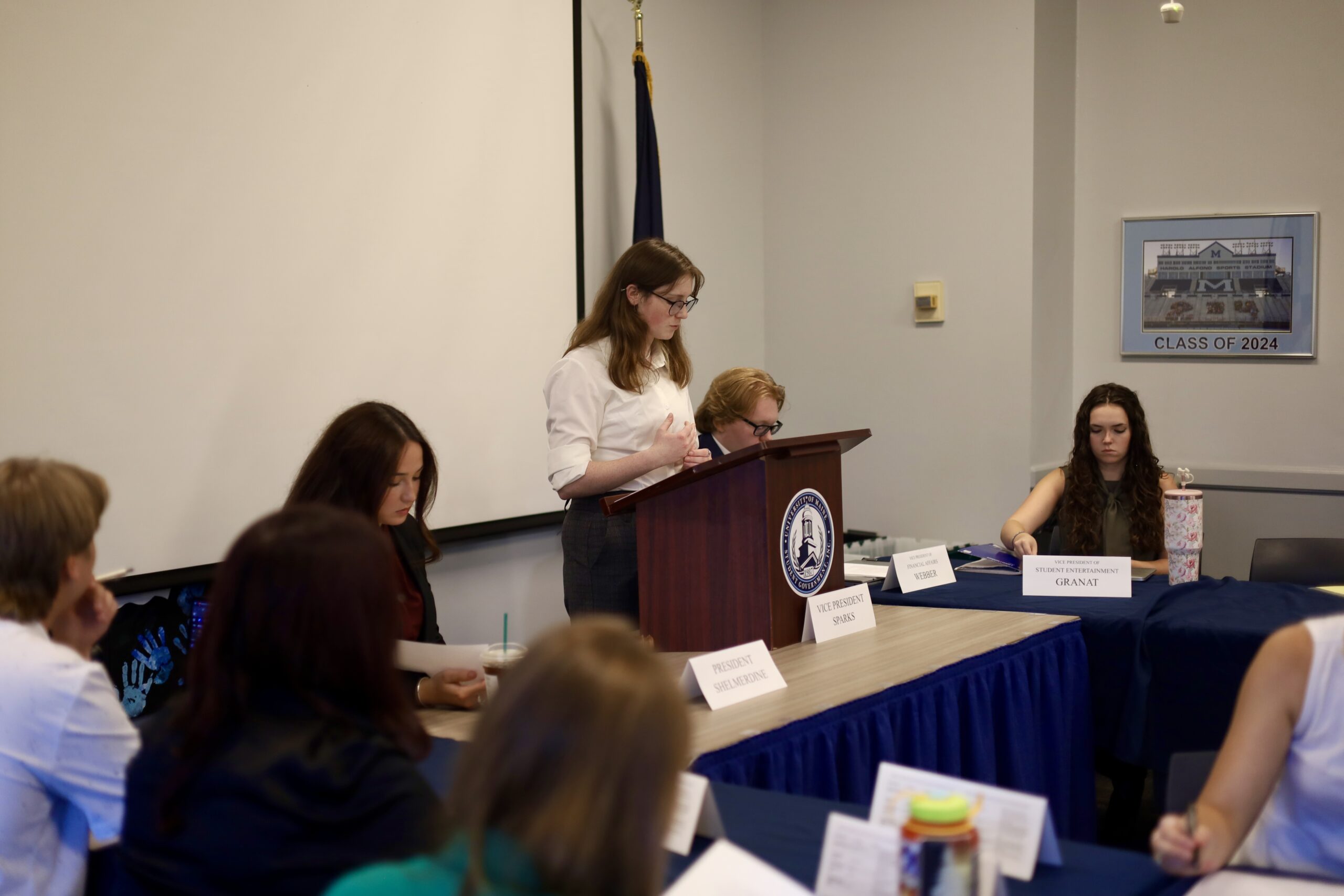
On Sept. 8, the General Student Senate (UMSG) held its 1,617th meeting in the Bangor Room of the Memorial Union at its usual time of 6:00 p.m. The meeting covered several topics concerning the relationship between the University of Maine and the surrounding Orono community, as well as the Senate’s goals and priorities for the upcoming academic year.
The meeting began with the swearing-in of six senators: Max Field, Emily Houghton, Nolan Ainsworth, Gryphon Nobel-Brown, Aaron Rose and Sean Kenny. Following the swearing-in ceremony, the Senate moved into its scheduled agenda, beginning with a guest speaker from the Orono Town Council.
Guest Speaker
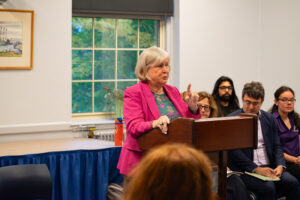
Dan Demeritt, a member of the Orono Town Council, spoke to the Senate about several issues involving students and the broader Orono community. One of the main topics of his discussion was the restructuring of quiet hours and the changes made to the fine structure for disorderly activity violations during the previous year.
Demeritt discussed the changes as a way of addressing community concerns while also creating a system that places greater emphasis on improvement rather than punishment. Under the current structure, a disorderly activity violation carries a starting fine of $300. Each subsequent offense adds another $300 to the fine, with the maximum fine reaching $1,200.
Demeritt emphasized that the Good Neighbor Committee wants to prioritize safety and improvement over punishment. He said he hopes the approach will help prevent disagreements between the university and the town from becoming a larger divide.
Rather than viewing the university and Orono as separate communities, Demeritt said he wants to “connect us as a community.”
As part of this approach, the Good Neighbor Committee is offering a rebate of more than $2,400 to individuals who receive a fine but do not have any subsequent violations. The rebate is intended to provide an incentive for individuals to avoid further violations while also reinforcing the committee’s focus on long-term improvement.
Demeritt also emphasized the importance of communication between the town and students. He said he hopes students understand that town officials are willing to listen to their concerns and use those conversations to make changes.
“We listen and learn from the students,” said Demeritt.
Another proposal discussed during Demeritt’s appearance was the creation of a liaison position between UMSG and the Orono Town Council. According to Demeritt, the position would work with the Good Neighbor Committee and help student renters better understand the resources and assistance available to them through the town of Orono.
The proposed liaison would also work across several groups, including the university, police department and town government. The goal is to create a stronger connection between students and local government while helping Orono residents better navigate issues that affect them.
New Business
UMSG President Cynthia Shelmerdine identified cross-collaboration as one of the major themes for the year. Shelmerdine discussed the issue of different groups on campus operating separately and said she wants the Senate to play a role in bringing those groups together.
“Siloing is something we all have seen and experienced on this campus,” said Shelmerdine. “My goal is to be one of the starting forces against that.”
Shelmerdine explained that expanding the Student Advisory Board will be one of the ways the Senate plans to address this issue. The board could provide additional opportunities for students to communicate their concerns and ideas to university leadership and student government.
Another priority Shelmerdine discussed was increasing student awareness of the university’s general fund. She said she wants students to have a better understanding of where university money comes from, where it goes and why it is allocated in certain ways.
Shelmerdine also pointed to the contrast between new facilities on campus and areas of the south end of campus that are in need of repairs. Increasing awareness of university finances, she said, could help students better understand the decisions behind those differences.
UMSG Vice President Hazel Sparks also outlined her goals for the semester. Sparks said she hopes to improve committee productivity and make the Senate’s committees more effective. Her broader goal is to support the Senate and expand its abilities to serve students.
Senator Elections and Appointments
The final major point of business was the nomination and election of senators to various positions within UMSG. These positions allow senators to take on specific responsibilities and represent the Senate in different areas of university and community affairs.
With the new senators sworn in, committee positions filled and goals established for the upcoming year, the General Student Senate meeting came to a close.