The University of Maine General Student Government (UMSG) met on Sept. 29 in the Bangor Room of the Memorial Union, where university administrators addressed concerns about UMaine’s budget deficit, potential program changes and the future of student services.
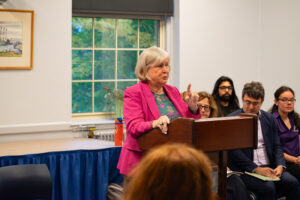
President Joan Ferrini-Mundy, Vice President for Finance and Administration and Chief Business Officer Jenny Boyden and Executive Vice President for Academic Affairs and Provost Gabriel Paquette spoke with senators about the university’s financial situation and answered questions about how administrators plan to address the deficit.
Boyden began the discussion with a presentation on the university’s budget, explaining its different sources of funding and the distinction between restricted and unrestricted funds. Approximately 67% of the university’s budget goes toward compensation and benefits, while other recurring expenses include facilities, fuel, utilities and technology.
Boyden said expenses are increasing faster than university revenue, making changes necessary to prevent the budget gap from continuing to grow.
Ferrini-Mundy said financial challenges are not unique to UMaine, noting that colleges and universities nationwide are facing rising costs and limited or declining revenue. She said the university is considering both short and long-term strategies, including increasing enrollment among out-of-state, returning and graduate students.
“The University of Maine has been here for a long time and will continue to be,” Ferrini-Mundy said.
Paquette addressed concerns about academic programs and potential program closures. He said the university has a responsibility to students who enroll in a program to continue offering that course of study until they graduate.
He added that programs regularly change based on student demand. The University of Maine System (UMS) Board of Trustees, for example, recently voted to eliminate a Romance Languages degree that currently has no enrolled students. Paquette described the creation and elimination of programs as part of the university’s normal academic planning process.
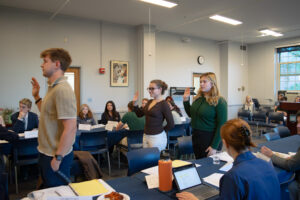
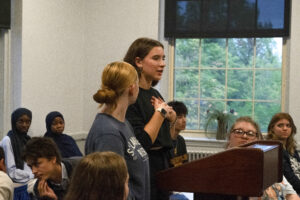
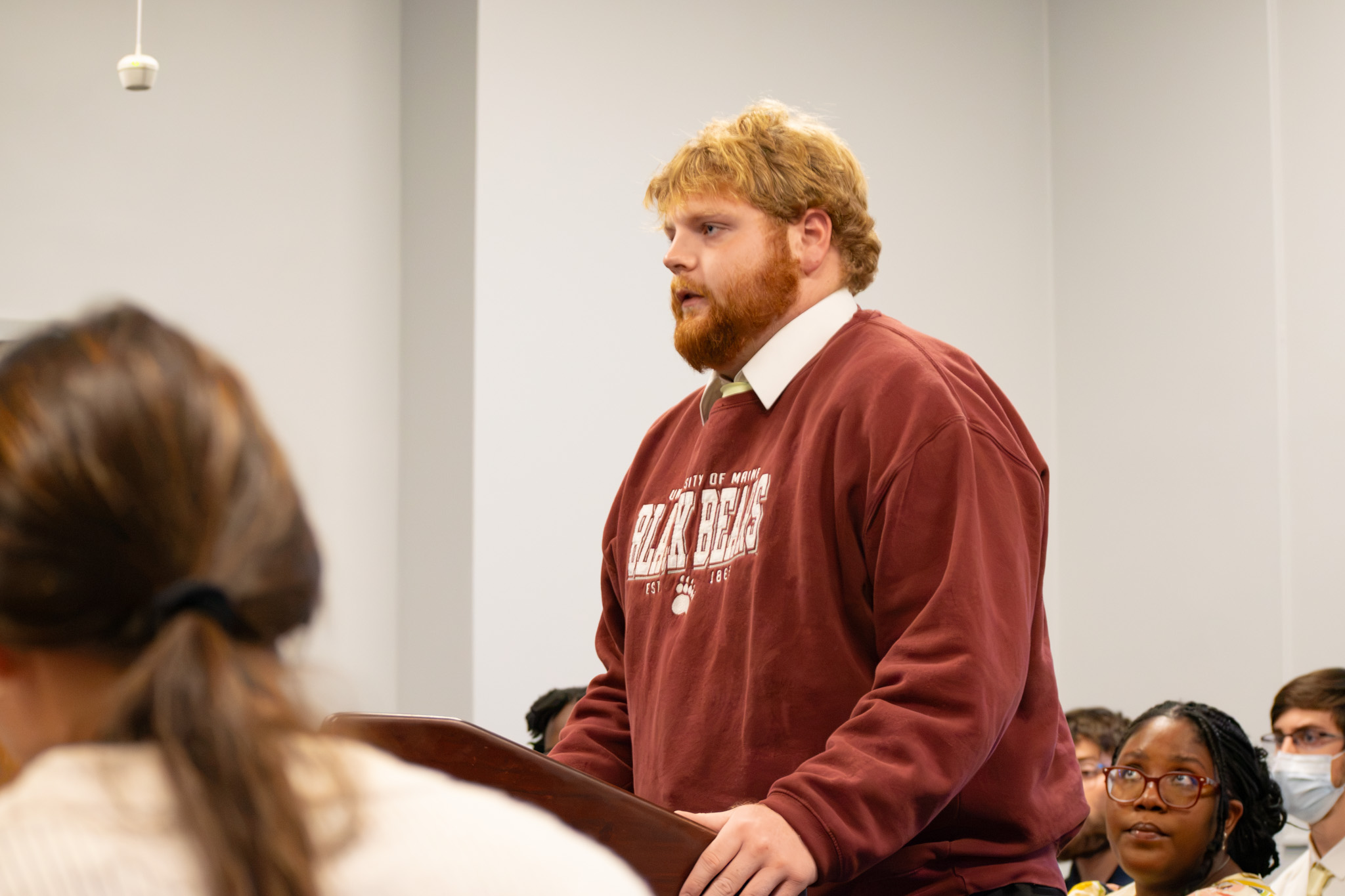
Senators questioned the administrators about enrollment, tuition, student services and how decisions about cuts would be made.
Paquette said the university hopes to increase enrollment by approximately 1% across several categories, including first-year, transfer, returning and graduate students. Administrators also hope to reach former students who earned college credits but never completed their degrees.
Sen. Braun asked whether student support services, including advising, counseling, disability services and financial aid, would be protected from staffing cuts.
Ferrini-Mundy described those services as vital but said the university could not guarantee that any particular area would be protected. Paquette said the university is currently making investments in those areas rather than cutting them.
Sen. Drost also asked whether students should expect another tuition increase following a 4% increase already approved by the UMS.
Ferrini-Mundy said specific guidance was not yet available but that tuition increases are “inevitable.” She said keeping UMaine comparatively affordable remains a priority. Boyden said additional budget assumptions would likely become available within the next month.
Administrators also addressed how potential staffing and academic cuts would be determined. Ferrini-Mundy said decisions would be based on factors including demand and use, while Paquette said academic program reviews examine where resources could better meet student demand.
When asked about potential layoffs, Ferrini-Mundy said the process would be guided in part by collective bargaining agreements and described layoffs as only one part of the university’s efforts to address its financial situation.
Club business
Outside of the budget discussion, the Senate granted preliminary recognition to the UMaine Chess Club and Student Maine Education Association.
The Chess Club currently has 20 members and meets on Saturdays in the Memorial Union. The Student Maine Education Association aims to build a community for students interested in education and connect students with the Maine Education Association.
Funding requests
The Senate also approved two major funding requests.
The Non-Traditional, Commuter and Transfer Students Committee received $4,264 for First Friday Bagels and Tasty Treat Tuesday. Sen. Olivia Barthelemy said the events are intended to bring students into the Wade Center, where they can learn about other resources and opportunities available to them.
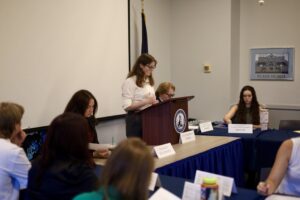
The Society of Women Engineers received $10,973 to help send 37 students to a conference in Boston. Club representatives said the conference is expected to include more than 14,000 professionals and students and over 300 employers, providing networking, internship and employment opportunities.
The estimated total cost of the trip is $20,329, with additional funding coming from engineering departments and the Maine College of Engineering and Computing.
New business
During new business, senators also discussed the possibility of creating a representative board focused on student mental health and wellness. Sen. St. Lawrence proposed the idea as a way to provide students with more direct input on health-related issues.
Senators discussed how such a board could interact with the existing Holistic Health and Wellness Committee and other university resources. No final action was taken on the proposal.
The Senate approved a separate policy establishing a structured process for student organizations to request storage space.