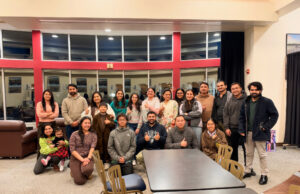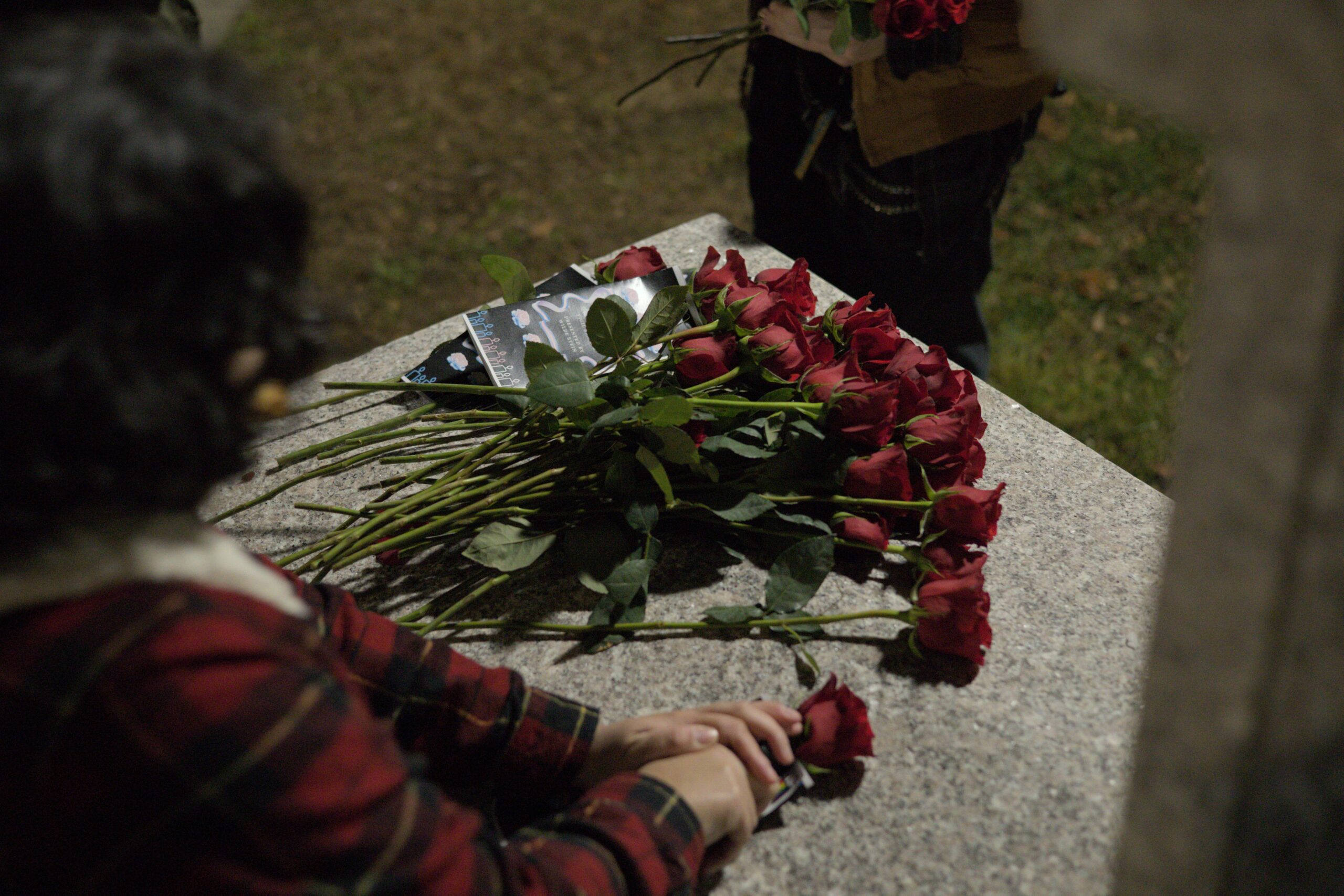
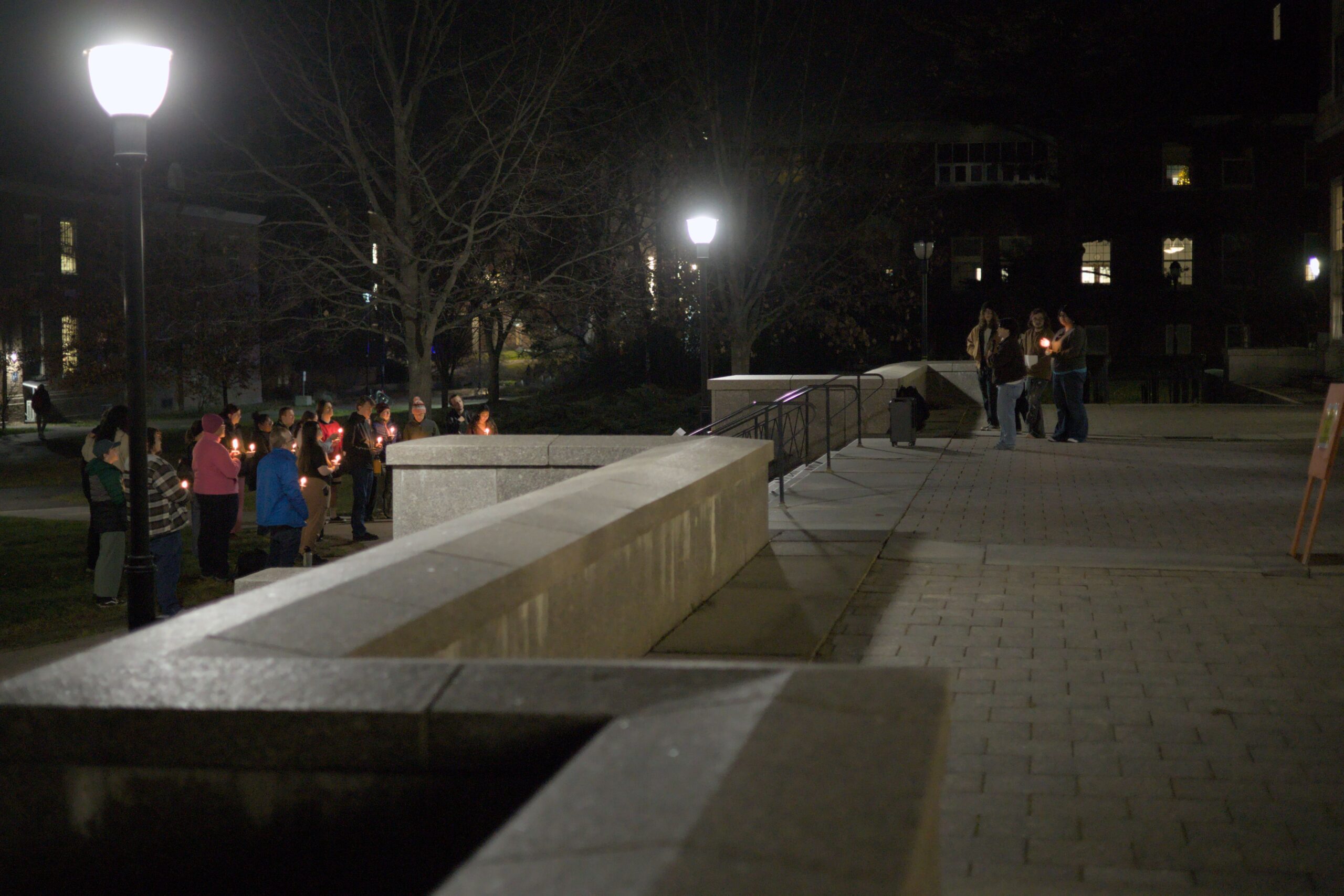
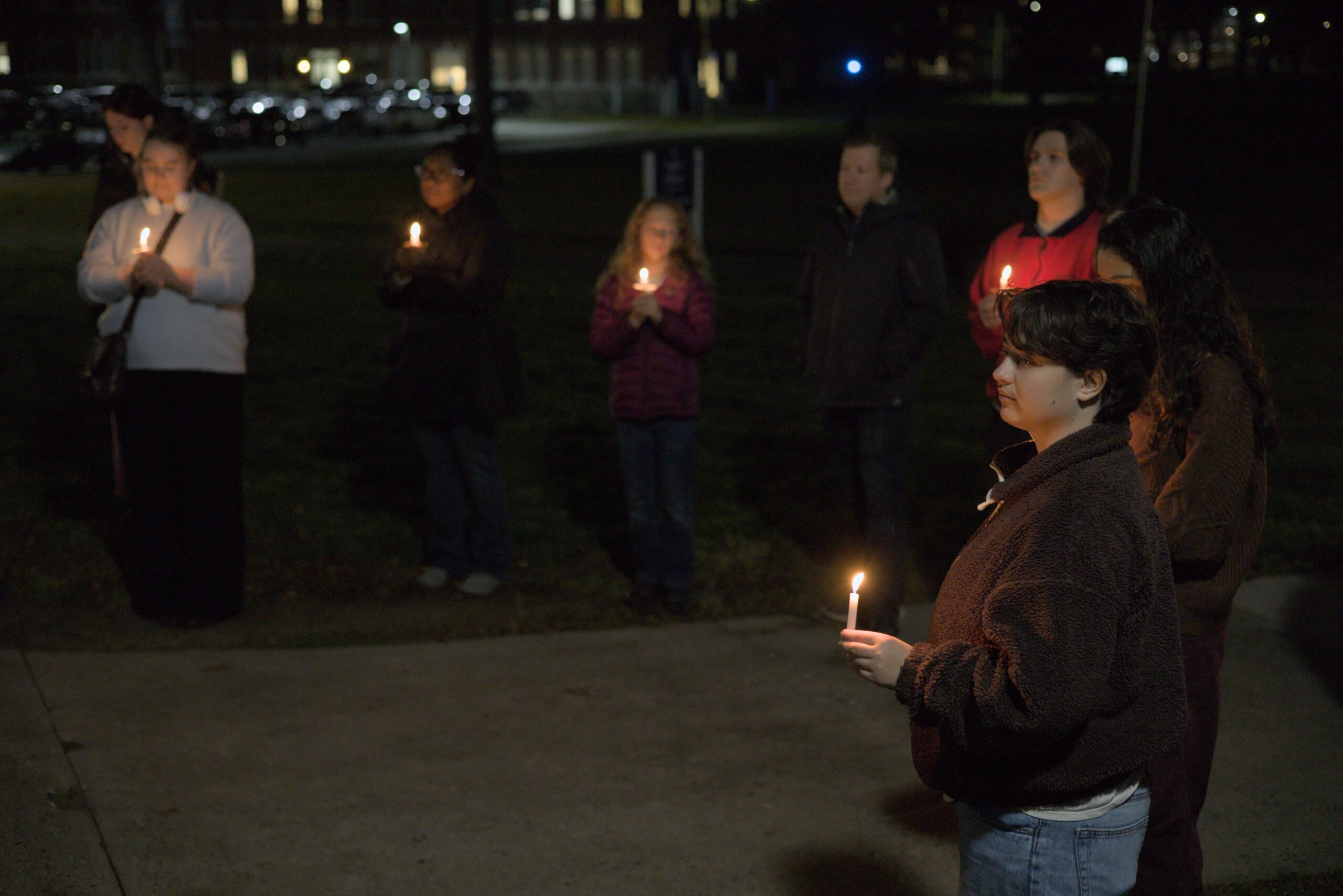
At 7 p.m. on Friday, Nov. 20, a group gathered on the steps of Fogler Library, candles in hand, for a vigil hosted by the University of Maine’s Wilde Stein club. Those in attendance came to mourn the loss of transgender individuals who died this year, including Julien Nadeau, a 21-year-old stabbed to death in Portland on Aug. 5, 2026. The Trans Remembrance Project has documented 28 known murders and 21 suicides across the U.S. this year.
Wilde Stein has been holding Trans Day of Remembrance gatherings since at least 2015, but the observance itself goes back much further. Trans Day of Remembrance was started in 1999 by Gwendolyn Ann Smith as a way to commemorate the death of Rita Hester, a Black trans woman who was stabbed to death in Boston on Nov. 28, 1998, in a case that remains unsolved. Since then, the annual observance has taken place every year on Nov. 20, to honor transgender people who have died as a result of violence.
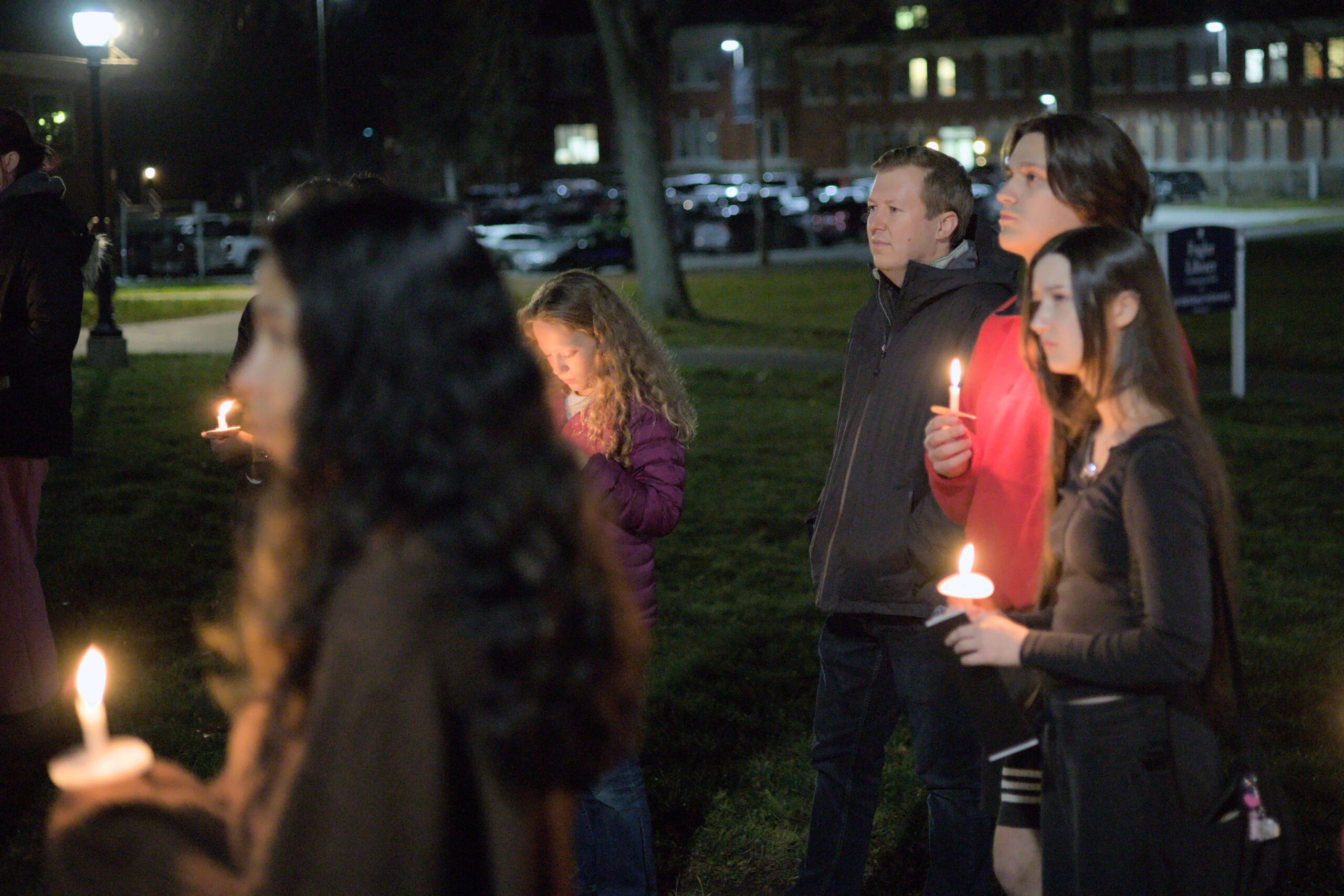
At the event, several people gave speeches. Among them was Archer Messervy, a second-year history student and member of Wilde Stein, who also spoke at last year’s event. When asked about the significance of the event, Messervy said, “Trans people are worth honoring and remembering and that is true of all trans people.”
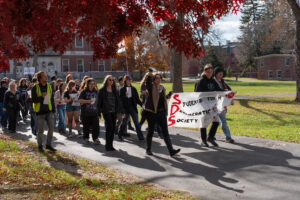
In 1974, when Wilde Stein attempted to hold a Maine Gay Conference, Neville and the university’s administration repeatedly tried to block the club’s efforts, while the Student Senate repeatedly denied or reduced its funding. Eventually, Neville and the university were pressured into allowing the conference to take place. Despite significant opposition from religious leaders and members of the Maine government, the event proceeded as the Maine Gay Symposium.
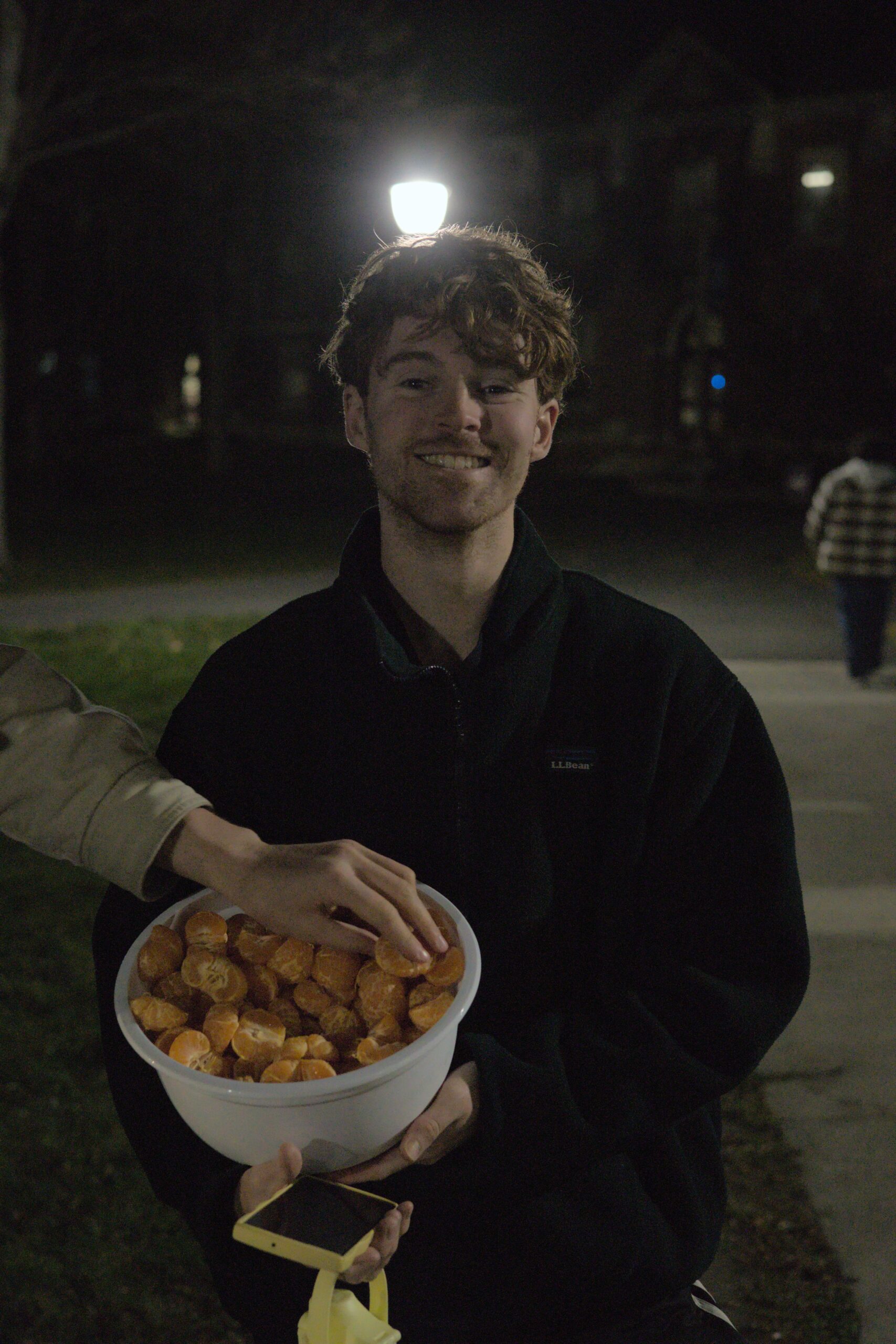
One familiar face at the vigil was state Sen. Mike Tipping, who represents District 8 and has attended the event for the past four to five years.
“I think the violence and hatred against trans people is one of the greatest civil rights issues of our time,” said Tipping in an interview.
According to this year’s report by the Trans Remembrance Project, violence committed by others was the leading cause of documented trans deaths, with most victims of fatal violence being people of color, particularly trans women.
Wilde Stein president Michelangelo Keyes described the event as a very emotional one, stating, “Every year it gets worse,” referring to what Keyes described as an increase in attacks on transgender individuals. Keyes said it is precisely this increase that makes the vigil so important, as a way to draw attention to the threats facing the LGBTQ+ community.